Stable isotope analyzers

Stable isotope analyzers determine differences in the relative abundance of stable isotopes in a sample. These measurements provide information about the origin, history and transformation of materials and support research in fields including environmental science, food authenticity, geoscience, ecology and forensics.

What is stable isotope analysis?

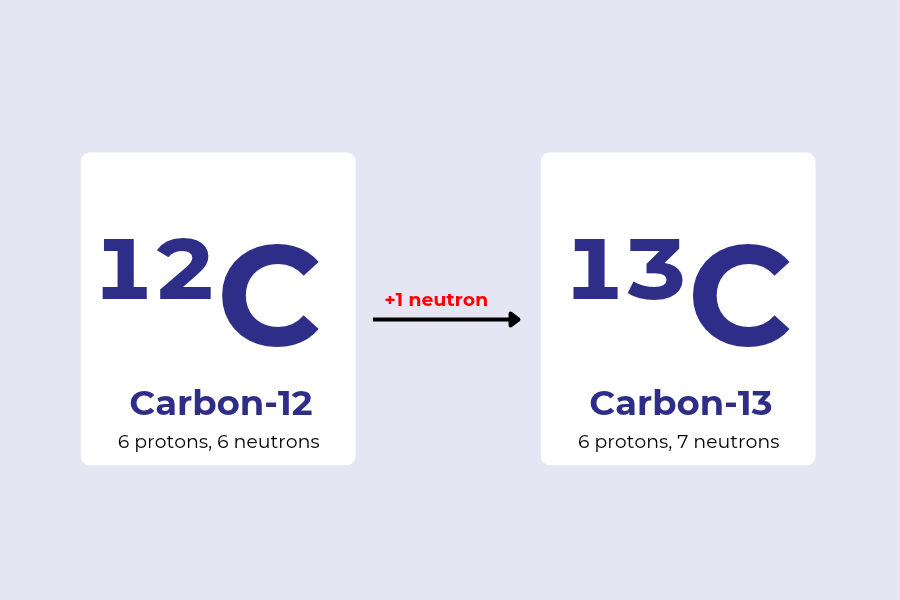
Isotopes are atoms of the same chemical element that contain the same number of protons but different numbers of neutrons. Stable isotopes do not undergo radioactive decay and occur naturally in different relative abundances.

Stable isotope analysis measures the ratio between heavier and lighter isotopes of an element. 

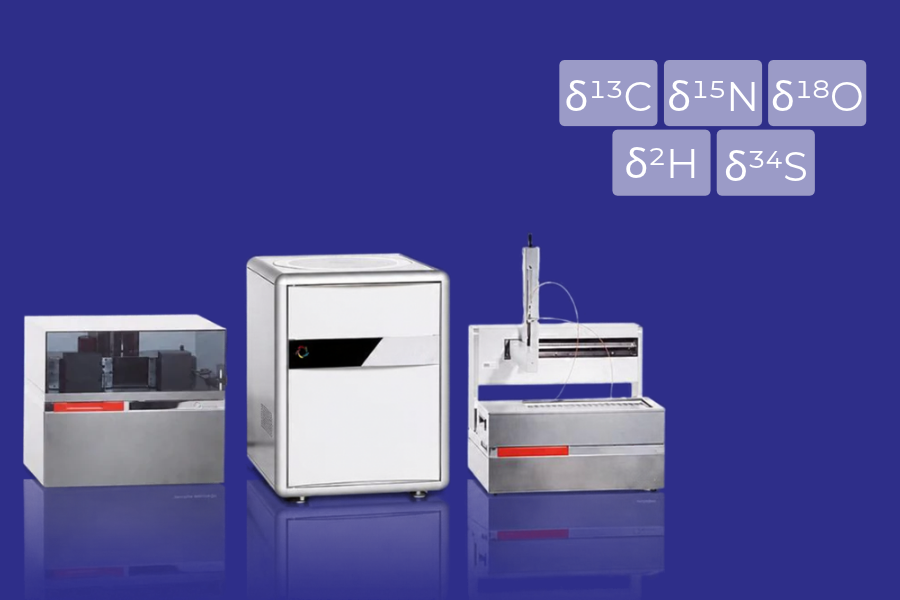
Common measurements include:

  • Carbon: δ¹³C
  • Nitrogen: δ¹⁵N
  • Oxygen: δ¹⁸O
  • Hydrogen: δ²H
  • Sulfur: δ³⁴S

These ratios can vary according to the geographical origin, production process, environmental conditions or biological history of a sample. Stable isotope analysis can therefore be used to investigate where a material originated, how it was produced and which physical, chemical or biological processes it has undergone.

Unlike conventional elemental analysis, stable isotope analysis does not primarily determine the total concentration of an element. It measures small variations in the relative abundance of its isotopes.

How does a stable isotope analyzer work?

Stable isotope analysis is commonly performed using isotope ratio mass spectrometry, or IRMS. Before measurement, the relevant elements in the sample must be converted into purified gases such as carbon dioxide, nitrogen, hydrogen, carbon monoxide or sulfur dioxide.

The preparation method depends on the sample and analytical objective. An elemental analyzer can convert bulk solid or liquid samples into gases through combustion or pyrolysis. Chromatography systems first separate individual compounds, while headspace and dual inlet systems prepare gases, liquids or carbonate samples.

The prepared sample gases enter the isotope ratio mass spectrometer, where they are ionized. The resulting ions are separated according to their mass-to-charge ratio and measured by dedicated collectors.

The instrument compares the abundance of the heavier and lighter isotopes. Results are generally reported using delta notation in parts per thousand, or per mille, relative to an internationally recognized reference material.

Applications of organic elemental analysis

Stable isotope analysis is used when conventional concentration measurements cannot provide sufficient information about a sample’s origin or history.

Common areas of application include:

  • Food and beverage authenticity
  • Detection of product adulteration
  • Geographical-origin verification
  • Environmental and climate research
  • Ecology and food-web studies
  • Soil, plant and fertilizer research
  • Hydrology and oceanography
  • Greenhouse-gas research
  • Geoscience and paleoclimate studies
  • Petroleum and fuel research
  • Archaeology and forensics
  • Sports-doping analysis
  • Medical and clinical research

The appropriate analytical system depends on the isotopes, sample matrix, concentration, required precision and whether bulk or compound-specific information is needed.

Components of a stable isotope analysis system

A complete stable isotope analysis system generally consists of an isotope ratio mass spectrometer and one or more sample inlet systems.

mass spectrometers

Mass spectrometers 

Measures stable isotope ratios in prepared sample gases.

chromatography inlets

Chromatography inlets

Separates individual compounds before isotope measurement.

dual inlet analyzers

Dual inlet analyzers

Introduces purified sample gas and reference gas into mass spectrometer.

elemental analyzers

Elemental analyzers

Converts bulk samples into measurable gases through combustion or high-temperature pyrolysis.

headspace analyzers

Headspace analyzers

Prepare gases from sealed sample vials before transferring them to the mass spectrometer.

Choosing a stable isotope analysis system

Selecting a stable isotope analyzer starts with defining the analytical question, isotopes, sample type and required measurement precision.

Isotopes to be measured

The required system depends on whether the laboratory needs carbon, nitrogen, sulfur, oxygen, hydrogen or multi-isotope analysis. Not every inlet is suitable for every isotope.

Bulk or compound-specific analysis

Bulk isotope analysis provides an average isotope ratio for the entire sample. Compound-specific analysis separates individual compounds before measuring their isotope ratios.

Compound-specific analysis may provide additional information when a sample contains several components with different origins.

Sample type

Solid materials, aqueous samples, volatile compounds, pure gases, water and carbonate materials require different preparation techniques. The selected inlet must convert the sample into a gas without changing its isotope ratio.

Concentration and sample quantity

Low-concentration compounds and trace atmospheric gases may require separation, trapping or preconcentration before measurement. Sample quantity can also influence the choice of inlet and autosampler.

Precision requirements

Dual inlet analysis is generally used when the highest measurement precision is required for purified gases, water or carbonate samples. Continuous-flow systems provide greater flexibility and automated analysis across a wider range of sample types.

System flexibility

Laboratories working across different research areas may benefit from a configurable mass spectrometer that can switch between several inlet systems. A preconfigured application-specific solution may be more suitable when the laboratory performs a defined analytical workflow.

Frequently asked questions

What does IRMS mean?

IRMS stands for isotope ratio mass spectrometry. It is a mass-spectrometric technique used to measure small differences in the relative abundance of stable isotopes in a sample.

Depending on the mass spectrometer, inlet and configuration, stable isotope systems can measure hydrogen, carbon, nitrogen, oxygen and sulfur isotope ratios. These are commonly reported as δ²H, δ¹³C, δ¹⁵N, δ¹⁸O and δ³⁴S values.

Conventional elemental analysis determines how much of an element is present in a sample. Stable isotope analysis determines the relative abundance of different stable isotopes of that element.

An elemental analyzer can also serve as a sample inlet for IRMS by converting the elements in a sample into suitable gases.

Bulk analysis measures the average isotope ratio of an entire sample. Compound-specific isotope analysis first separates individual compounds using gas or liquid chromatography and then measures their isotope ratios separately.

Generally, the original sample must first be converted into a purified gas. The required inlet depends on whether the sample is a solid, liquid, separated compound, pure gas, carbonate or headspace sample.

Dual inlet analysis alternately introduces purified sample and reference gases into the mass spectrometer. Because both gases are handled under closely matched conditions, the technique supports very precise isotope-ratio measurements.

Yes. A configurable mass spectrometer such as the isoprime precisION can be combined with several inlet systems. This allows one central IRMS instrument to support different sample types and analytical techniques.

The iso FLOW GHG is specifically designed for stable isotope analysis of trace greenhouse gases. Depending on its configuration, it can analyze carbon dioxide, nitrous oxide and methane.

Our stable isotope analysis systems

SciSPX supplies stable isotope analysis systems to laboratories in Belgium, the Netherlands and Luxembourg. The available portfolio includes isotope ratio mass spectrometers and inlet systems for bulk samples, separated compounds, pure gases, liquids and headspace samples.

The systems differ mainly in their function, sample types, isotope measurements and intended applications. Use the comparison below to identify which type of stable isotope analysis system best matches your requirements.

System type
Primary function
Suitable for
Mass spectrometers
Measure stable isotope ratios in prepared gases
Configurable or application-specific IRMS systems
Chromatography inlets
Separate compounds before isotope measurement
Compound-specific isotope analysis
Dual inlet analyzers
Compare purified sample and reference gases
High-precision analysis of pure gases, water and carbonates
Elemental analyzers
Convert bulk samples into gases through combustion or pyrolysis
Solids, liquids and aqueous samples
Headspace analyzers
Prepare gases from sealed sample containers
Gases, liquids, carbonates and greenhouse gases

Find the right stable isotope analyzer

Selecting a stable isotope analysis system requires more than choosing a mass spectrometer. The complete configuration must match the isotopes, sample matrix, concentration range, preparation method and required measurement precision.

We can help you compare the available mass spectrometers and inlet systems and select a configuration suited to your research and analytical workflow.

The isotope ratio mass spectrometer measures the relative abundance of isotopes in the gases delivered by the inlet. A configurable mass spectrometer can be connected to different inlet systems, allowing several types of analysis to be performed with the same central instrument.

Chromatography inlets separate individual compounds before isotope measurement. They are used for compound-specific isotope analysis when a bulk measurement would not provide enough information.

Gas chromatography is suited to volatile or derivatized compounds. Liquid chromatography can separate dissolved, non-volatile or thermally sensitive compounds.

A dual inlet system alternately introduces purified sample gas and reference gas into the mass spectrometer. Both gases follow equivalent pathways, supporting highly precise comparison measurements.

This technique is particularly relevant for pure gases, water and carbonate analysis.

Elemental analyzers convert bulk samples into measurable gases through combustion or high-temperature pyrolysis. Depending on the configuration, they can support carbon, nitrogen, sulfur, oxygen and hydrogen isotope analysis.

These systems are commonly used for solid and liquid samples such as soil, plant material, food, chemicals and environmental samples.

Headspace analyzers prepare gases from sealed sample vials before transferring them to the mass spectrometer. Different configurations can be used for pure gases, liquids, carbonates, dissolved inorganic carbon and atmospheric greenhouse gases.

Read more

Elemental analysis in food and agricultural testing
Elemental analysis in fuel quality testing

Not sure which analyzer fits your application?

Our Xperts are happy to discuss your application and help you find the right solution.

Contact our Xperts

Prefer to give us a call?

The Netherlands
+31 (0)294 280 450

Belgium & Luxembourg
+32 (02)2 334 22 70