 English
 Dutch
 French

Organic elemental analyzers
Explore our organic elemental analyzers for CHNS, oxygen and trace element analysis. Compare systems for different elements, samples and applications.
What is organic elemental analysis?
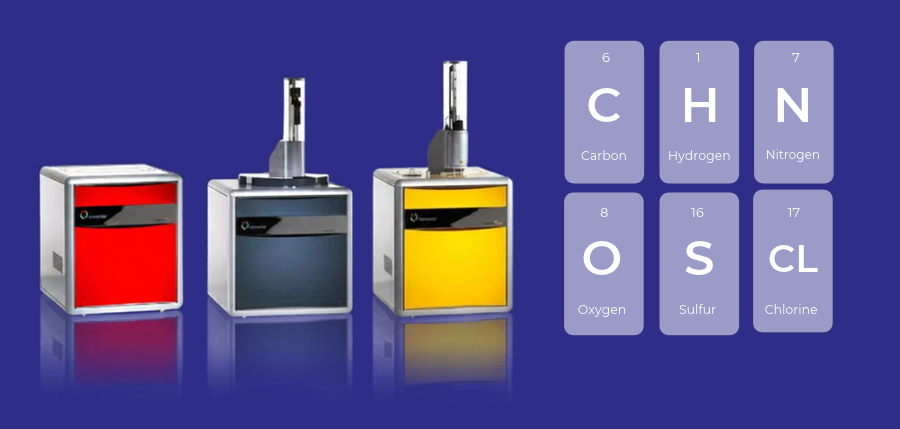
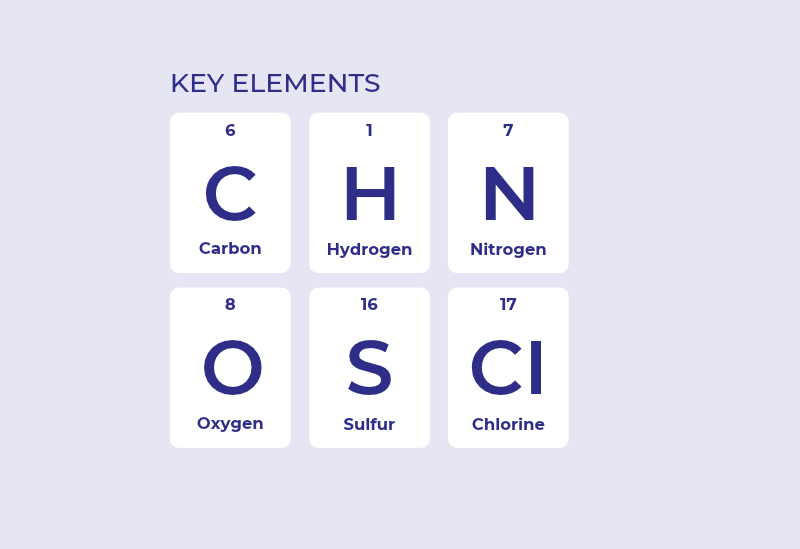
Organic elemental analysis is a quantitative technique used to determine the amount of specific elements in a sample. Depending on the analyzer and its configuration, these elements can include:
- Carbon (C)
- Hydrogen (H)
- Nitrogen (N)
- Sulfur (S)
- Oxygen (O)
- Chlorine (Cl)
The results are generally reported as an absolute amount or as a percentage of the sample mass. Elemental analysis can be used to characterize materials, verify composition and monitor product or process quality.
The term “organic elemental analysis” covers more than the analysis of purely organic substances. Depending on the instrument, samples can include chemicals, pharmaceuticals, fuels, coal, coke, soil, plant material and waste.
How does an organic elemental analyzer work?
Most organic elemental analyzers use high-temperature combustion to convert the elements in a sample into measurable gases. The sample is introduced into a furnace and decomposed under controlled conditions.
For CHNS analysis, the sample is combusted at high temperature. Carbon, hydrogen, nitrogen and sulfur are converted into gases such as carbon dioxide, water, nitrogen and sulfur dioxide. The gases are then separated and measured by suitable detectors.
Oxygen analysis follows a different process. The sample undergoes pyrolysis rather than combustion. Its oxygen is converted into carbon monoxide before separation and detection.
The exact combustion, gas-separation and detection technology differs between instruments. Dedicated analyzers can therefore provide greater sensitivity or optimized performance for a particular element or sample type.
Applications of organic elemental analysis
Organic elemental analyzers are used across research, industrial and environmental laboratories. The most suitable system depends on the elements being measured, expected concentrations and sample characteristics.
Common areas of application include:
- Chemicals and pharmaceuticals
- Soil, sediment and plant material
- Coal, coke and biomass
- Liquid and solid fuels
- Polymers and other materials
- Waste and environmental samples
- Academic and industrial research
Elemental analysis can support compositional verification, material characterization, quality control and compliance with analytical methods.

Choosing an organic elemental analyzer
Not every elemental analyzer is intended for the same measurement. Several factors should be considered when selecting a system.
Elements to be determined
A multi-element CHNS analyzer is appropriate when several elements must be measured from the same sample. A dedicated carbon and sulfur, oxygen, or sulfur and nitrogen analyzer may be more suitable when the laboratory focuses on a specific combination.
Concentration range
Major element concentrations and trace-level measurements require different analytical configurations. Dedicated trace analyzers are designed to detect very low concentrations that may fall outside the intended range of a general-purpose system.
Sample size and homogeneity
Small, homogeneous samples can be analyzed with micro or standard elemental analyzers. Larger samples can be useful when a material is less homogeneous or when reducing sample preparation is important.
Elementar offers systems for sample quantities ranging from very small amounts to several grams, depending on the instrument and application.
Sample type
Samples may be solid, liquid, viscous, volatile or difficult to combust. The available sample introduction options and combustion technology should match the physical properties of the samples.
Sample throughput
Routine laboratories may need automated sample introduction and unattended operation. The required throughput, autosampler capacity and expected maintenance should therefore be considered.
Frequently asked questions
Which elements can an organic elemental analyzer determine?
Depending on the instrument and configuration, an organic elemental analyzer can determine carbon, hydrogen, nitrogen, sulfur, oxygen and chlorine. Some systems can also measure parameters such as total organic carbon or total inorganic carbon.
What does CHNS analysis mean?
CHNS analysis is the quantitative determination of carbon, hydrogen, nitrogen and sulfur in a sample. A CHNS analyzer converts these elements into measurable gases and determines their concentrations.
What is the difference between combustion and pyrolysis?
Combustion takes place in the presence of oxygen and is commonly used for carbon, hydrogen, nitrogen and sulfur analysis. Pyrolysis takes place without oxygen and is used by the rapid OXY cube to determine oxygen.
Can elemental analyzers measure solid and liquid samples?
Yes, but sample compatibility depends on the instrument and its configuration. Some systems can analyze both solids and liquids as standard, while others require a specific autosampler or optional module.
Which analyzer is suitable for trace measurements?
The most suitable instrument depends on the element. The UNICUBE trace is designed for trace carbon and nitrogen measurements. The trace SN cube measures trace concentrations of sulfur and nitrogen, particularly in fuels and related samples. The rapid OXY cube can be configured for oxygen analysis in the low ppm range.
Why use a macro elemental analyzer?
A macro analyzer accepts larger sample quantities. This can be beneficial for less homogeneous materials because a larger quantity may provide a more representative sample. It can also reduce the amount of sample preparation required.
Our organic elemental analzyers and CHNS analyzers
SciSPX supplies organic elemental analyzers for laboratories in Belgium, the Netherlands and Luxembourg. The available systems range from versatile CHNS analyzers to dedicated instruments for oxygen, carbon, sulfur or trace-level measurements.
Our available systems cover different elements, concentration ranges, sample sizes and applications. Use the comparison below to identify which organic elemental analyzer best matches your analytical requirements.
Analyzer | Elements | Best suited for |
|---|---|---|
vario EL cube | C, H, N and S; optional O and Cl | Versatile multi-element analysis |
vario MAX cube | C, N and S | High-throughput analysis of larger samples |
rapid CS cube | C and S | Dedicated carbon and sulfur analysis |
rapid OXY cube | O | Dedicated oxygen analysis |
trace SN cube | S and N | Trace analysis, particularly in fuels |
UNICUBE trace | C and N | Trace carbon and nitrogen analysis |
vario MACRO cube | C, H, N and S; optional O and Cl | CHNS analysis of macro-sized samples |
Find the right organic elemental analyzer
Selecting an elemental analyzer starts with defining the elements, concentration range, sample size and sample type involved in the analysis. Throughput requirements and the need for dedicated trace measurements should also be considered.
We can help you compare our systems and select a configuration suited to your analytical requirements.

C, CI, H, N, O, S
vario EL cube
A versatile analyzer for the simultaneous determination of carbon, hydrogen, nitrogen and sulfur. It can operate in CHNS, CHN, CNS and CN modes.

C, N, S
vario MAX cube
Suitable for high-throughput carbon, nitrogen and sulfur analysis in larger samples. Its reusable crucibles accommodate samples of up to 5 g or 5 ml.

C, CI, S
rapid CS cube
Provides simultaneous carbon and sulfur analysis. It can analyze different sample types and quantities, including coal, coke, soil, plant material and waste.

O
rapid OXY cube
A dedicated oxygen analyzer based on high-temperature pyrolysis. The sample is pyrolyzed at 1,450 °C, converting its oxygen into carbon monoxide for subsequent detection.

N, S
trace SN cube
Intended for trace-level sulfur and nitrogen determination. It uses two independent combustion and detection channels, allowing the analytical conditions to be optimized separately for each element.

C, N
UNICUBE trace
Determines low concentrations of carbon and nitrogen in solid and liquid samples. It uses high-temperature combustion according to the Dumas method and has a stated detection limit of 10 µg/g, or 10 ppm.

C, CI, H, N, O, S
vario MACRO cube
Performs simultaneous carbon, hydrogen, nitrogen and sulfur analysis in macro-sized samples. It supports CHNS, CHN, CNS and CN configurations and accommodates samples up to 1.5 g.
Learn more about organic elemental analysis
Not sure which analyzer fits your application?
Our Xperts are happy to discuss your application and help you find the right solution.
