 English
 Dutch
 French

Inorganic elemental analyzers
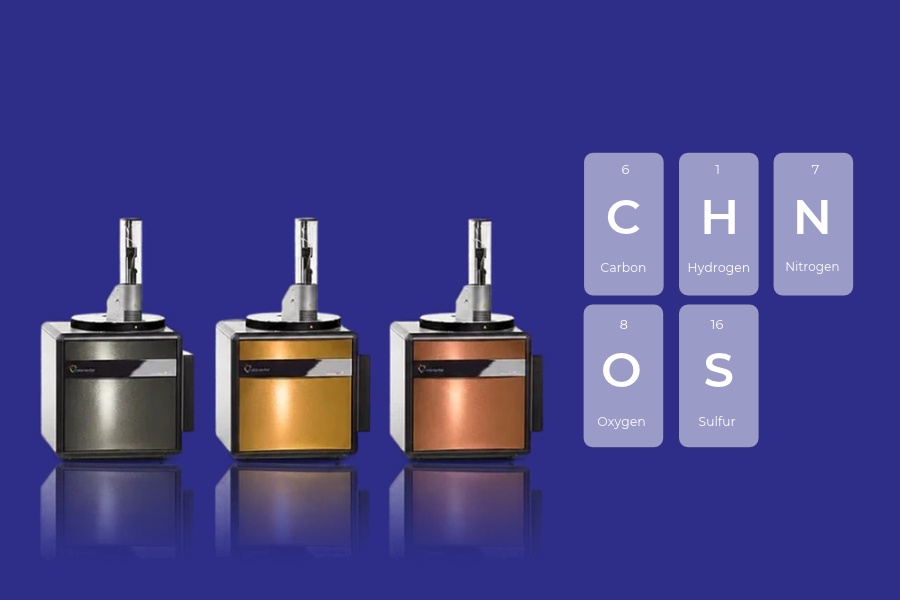
Inorganic elemental analyzers determine carbon, sulfur, oxygen, nitrogen and hydrogen in metals and other inorganic materials. These measurements provide important information about material composition and support research, quality control and production monitoring.
What is inorganic elemental analysis?
Inorganic elemental analysis determines the concentration of specific elements in materials such as metals, alloys, ceramics and metal powders.
Depending on the analyzer, the elements measured can include:
- Carbon (C)
- Sulfur (S)
- Oxygen (O)
- Nitrogen (N)
- Hydrogen (H)
Even at low concentrations, these elements can influence the properties and performance of a material. Their determination is therefore relevant for material characterization, incoming-goods inspection, process monitoring and quality control.
Inorganic elemental analyzers use different decomposition techniques depending on the elements being measured. Carbon and sulfur are determined through combustion, while oxygen, nitrogen and hydrogen are extracted using inert gas fusion.

How does an inorganic elemental analyzer work?
The sample is heated to a very high temperature to release the elements in a measurable gaseous form. The required atmosphere and subsequent gas analysis depend on whether carbon and sulfur or oxygen, nitrogen and hydrogen are being determined.
Carbon and sulfur analysis
For carbon and sulfur analysis, the sample is combusted in a pure oxygen atmosphere at temperatures above 2,000 °C. Carbon and sulfur compounds are converted into gaseous products, after which the gas flow is purified and analyzed.
The resulting gases are measured using infrared detectors. The carbon and sulfur concentrations are calculated from the detector response and sample weight.
Oxygen, nitrogen and hydrogen analysis
Oxygen, nitrogen and hydrogen are determined using inert gas fusion. The sample is melted in an inert gas atmosphere at temperatures approaching 3,000 °C.
The released gases are purified before detection. Oxygen is measured using an infrared detector, nitrogen using a thermal conductivity detector and hydrogen using either a dedicated electronic hydrogen sensor or thermal conductivity detection, depending on the analyzer and configuration.
Applications of inorganic elemental analysis
Inorganic elemental analyzers are used in laboratories working with metals, technical materials and production-related samples.
Common applications include:
- Steel and other alloys
- Non-ferrous metals
- Metal powders for additive manufacturing
- Titanium and zirconium
- Permanent magnets
- Metal oxides
- Ceramics and other inorganic materials
- Battery materials
- Battery production and recycling
- Research and material development
The appropriate analyzer depends on the elements being measured, sample matrix, expected concentration range and required throughput.

Choosing an inorganic elemental analyzer
Several analytical and practical factors should be considered when selecting a system.
Elements to be determined
A dedicated CS analyzer is appropriate when the laboratory only needs carbon and sulfur results. An ONH analyzer is intended for oxygen, nitrogen and hydrogen analysis.
Laboratories requiring all five elements can use a combined CS/ONH analyzer instead of operating two separate instruments.
Sample material
The analyzer and selected method must be compatible with the sample material. Metals, alloys, powders, ceramics and other inorganic samples can require different crucibles, additives or analytical conditions.
Concentration range
The expected elemental concentration influences the detector configuration, calibration and required sample quantity. Trace concentrations and high element contents must both fall within the intended analytical range of the instrument.
Sample throughput
Routine and production laboratories may benefit from an automated sampler and unattended operation. Laboratories processing fewer samples may prefer a manual sample introduction system.
Laboratory workflow
Available bench space, carrier-gas requirements, maintenance and the need to switch between CS and ONH measurements should also be considered. A combined analyzer saves bench space, while dedicated systems may be more appropriate for continuous routine analysis of a specific element group.
Frequently asked questions
Which elements can an inorganic elemental analyzer determine?
Depending on the instrument, an inorganic elemental analyzer can determine carbon, sulfur, oxygen, nitrogen and hydrogen. The inductar CS cube measures carbon and sulfur, while the inductar ONH cube measures oxygen, nitrogen and hydrogen. The inductar EL cube combines both element groups.
What is CS analysis?
CS analysis is the simultaneous determination of carbon and sulfur in a sample. The sample is combusted in oxygen at high temperature, after which the resulting gases are purified and measured using infrared detectors.
What is ONH analysis?
ONH analysis determines oxygen, nitrogen and hydrogen in metals and other inorganic materials. The sample is melted in an inert gas atmosphere, and the released gases are subsequently purified and measured.
What is inert gas fusion?
Inert gas fusion is a decomposition technique used for oxygen, nitrogen and hydrogen analysis. The sample is melted at a very high temperature in an inert atmosphere, releasing gases that can be separated and detected.
Compare our inorganic elemental analyzers
SciSPX supplies inorganic elemental analyzers to laboratories in Belgium, the Netherlands and Luxembourg. The available systems include dedicated CS and ONH analyzers and a combined platform for all five elements.
The available systems differ mainly in the elements measured, decomposition method and intended laboratory workflow. Use the comparison below to identify which inorganic elemental analyzer best matches your requirements.
Analyzer | Elements | Decomposition method | Maximum sample size | Sample introduction | Best suited for |
|---|---|---|---|---|---|
inductar CS cube | Carbon and sulfur | High-temperature combustion in oxygen | Up to 1 g | Manual sampler or 89-position autosampler | Dedicated, high-throughput CS analysis |
inductar EL cube | Carbon, sulfur, oxygen, nitrogen and hydrogen | Combustion and inert gas fusion | Up to 1 g | Manual sampler or autosampler with up to 89 positions | Laboratories requiring CS and ONH analysis from one platform |
inductar ONH cube | Oxygen, nitrogen and hydrogen | Inert gas fusion | Up to 1 g | Manual sampler or 23-position autosampler | Dedicated ONH analysis in metals and other inorganic materials |
Find the right inorganic elemental analyzer
Selecting an inorganic elemental analyzer starts with defining the elements, sample materials, expected concentrations and required throughput. The choice between a dedicated system and a combined platform also depends on the laboratory workflow.
We can help you compare the available systems and select a configuration suited to your analytical requirements.

C, S
inductar CS cube
Provides simultaneous carbon and sulfur analysis in solid inorganic samples using high-temperature combustion. It is available with a manual sampler or an 89-position autosampler for automated routine analysis.

C, N, S, O
inductar EL cube
Combines carbon, sulfur, oxygen, nitrogen and hydrogen analysis in one instrument. It uses combustion for CS determination and inert gas fusion for ONH analysis.

O, N, H
inductar ONH cube
Determines oxygen, nitrogen and hydrogen in metals and other inorganic materials using inert gas fusion. It is available in ONH, ON and OH configurations with manual or automated sample introduction.
Not sure which analyzer fits your application?
Our Xperts are happy to discuss your application and help you find the right solution.
