 English
 Dutch
 French

Rapid protein analyzers
Rapid protein analyzers determine the protein content of food and related samples within minutes. Depending on the system, protein can be measured directly or calculated alongside moisture and fat for rapid process and quality control.
What is protein analysis?
Protein analysis determines the amount of protein present in a sample. It is widely used to verify nutritional composition, inspect raw materials, control production processes and confirm that finished products meet their specifications.
Protein can be determined using several analytical methods. Traditional Kjeldahl and Dumas methods measure nitrogen and convert the result into an estimated protein concentration. Direct protein analysis instead measures protein-specific components, avoiding interference from many non-protein nitrogen compounds.
The most appropriate method depends on the sample, required analysis time, laboratory workflow and applicable analytical standard.
Direct protein analysis versus nitrogen-based methods
Kjeldahl and Dumas analysis determine the nitrogen concentration of a sample. The result is multiplied by a conversion factor to calculate crude protein content. These methods may include nitrogen originating from non-protein compounds.
Direct protein analysis responds to protein itself rather than measuring total nitrogen. This can make it useful for samples in which non-protein nitrogen or nitrogen-containing adulterants could affect a nitrogen-based result.
The selected method should correspond with the sample type, purpose of the analysis and applicable reference method. Nitrogen-based and direct protein results should not automatically be treated as interchangeable.
How does a rapid protein analyzer work?
The available protein analyzers use two different measurement approaches.
Direct protein measurement
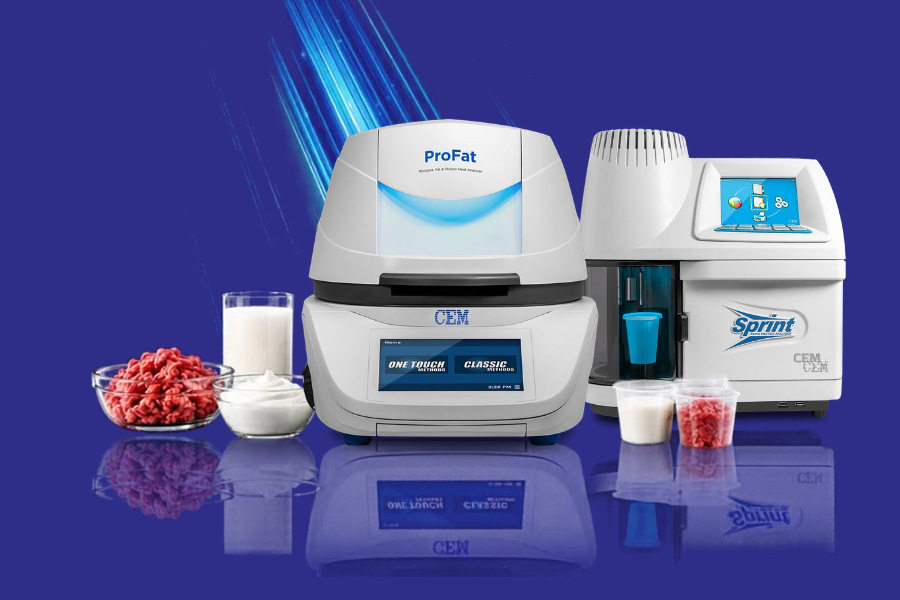
The SPRINT uses iTAG protein-tagging technology. A dye binds to specific amino-acid groups found in proteins. The instrument measures the amount of bound dye and calculates the protein concentration directly.
Because the method responds to protein rather than total nitrogen, it does not require a nitrogen-to-protein conversion factor. The automated measurement takes less than five minutes.
Multi-parameter meat analysis
The ProFat determines moisture directly using microwave and infrared drying. A data model then uses the measurement to estimate the fat and protein content of raw meat and meat blends.
The system provides moisture, fat and protein results from a single analysis in approximately 2.5 minutes. It is intended specifically for rapid process control in raw-meat production.
Applications of rapid protein analysis
Rapid protein measurements support product development, incoming-goods inspection, process control and final-product testing.
Typical applications include:
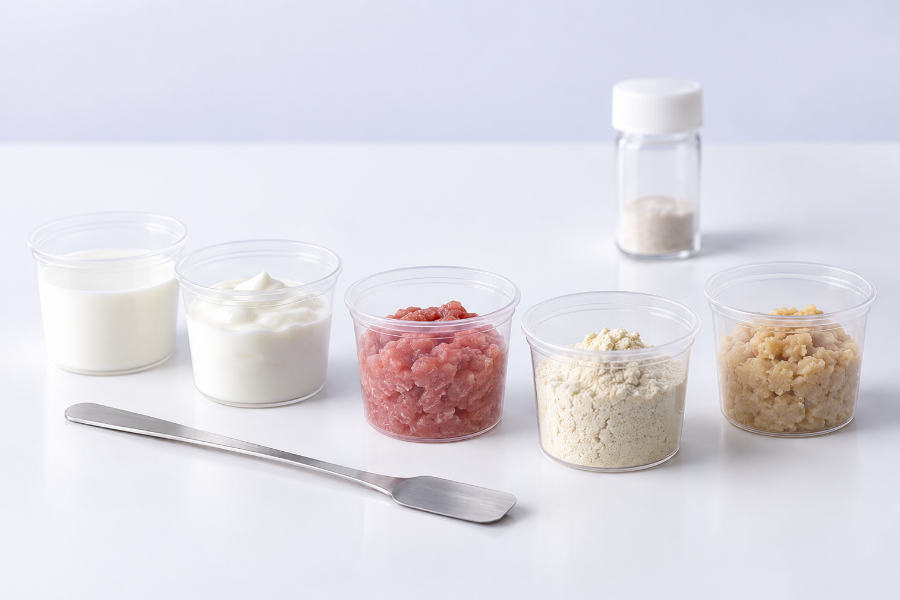
- Milk and dairy products
- Yogurt and cultured dairy products
- Meat and processed meat
- Raw meat and meat blends
- Nutritional drinks
- Plant-based foods
- Alternative proteins
- Pet food
- General food products
The suitability of a system depends on the sample matrix and whether protein alone or several compositional parameters are required.

Choosing a protein analyzer
Several factors should be considered when selecting a protein analysis system.
Required parameters
A dedicated protein analyzer is suitable when protein is the principal parameter. Laboratories and production facilities that need moisture, fat and protein results from raw meat can use a multi-parameter system.
Sample type
The analytical method must be suitable for the intended samples. The SPRINT covers a broad range of food products, while the ProFat is specifically designed for raw and pre-blended meat.
Measurement principle
Direct protein measurement and model-based multi-parameter analysis serve different purposes. Consider whether protein must be measured directly or whether a rapid process-control estimate is appropriate.
Analysis time
Rapid measurements allow production teams to react more quickly to compositional changes. Both available systems provide results within minutes and can be positioned close to the production environment.
Analytical method
Laboratories working according to recognized standards should confirm that the selected method is appropriate for their samples and reporting requirements.
Frequently asked questions
How is protein content measured?
Protein can be measured directly using protein-binding techniques or estimated by measuring nitrogen and applying a conversion factor. The appropriate approach depends on the sample and analytical requirements.
What is direct protein analysis?
Direct protein analysis measures protein-specific components rather than total nitrogen. For example, a protein-tagging method uses a dye that binds to particular amino-acid groups in proteins.
What is the difference between direct protein analysis and Dumas analysis?
Direct protein analysis responds to protein itself. Dumas analysis combusts the sample, measures its nitrogen content and calculates protein using a conversion factor.
Does direct protein analysis require a conversion factor?
A direct protein-tagging method does not use a nitrogen-to-protein conversion factor. Nitrogen-based methods such as Dumas and Kjeldahl normally require a factor appropriate to the sample.
Which samples can be analyzed?
Applications include dairy products, meat, processed foods, nutritional drinks, plant-based products and other food samples. The supported matrices depend on the selected analyzer and method.
Can moisture, fat and protein be determined together?
Yes. Multi-parameter systems can provide moisture, fat and protein results from one sample. These systems may be developed for a specific application, such as rapid analysis of raw meat and meat blends.
Compare our rapid protein analyzers
SciSPX supplies protein analysis systems to laboratories and food manufacturers in Belgium, the Netherlands and Luxembourg. The available solutions include a direct protein analyzer for diverse food products and a multi-parameter system developed specifically for raw meat and meat blends.
The available systems differ in their measurement principles, applicable samples and reported parameters. Use the comparison below to identify which analyzer best matches your requirements.
Analyzer | Parameters | Measurement principle | Analysis time | Best suited for |
|---|---|---|---|---|
SPRINT | Protein | Direct iTAG protein-tagging method | Less than 5 minutes | Direct protein analysis in food products |
ProFat | Moisture, fat and protein | Direct moisture measurement with data modelling for fat and protein | Approximately 2.5 minutes | Rapid compositional analysis of raw meat and meat blends |
Looking for nitrogen-based protein analysis?
Dumas analyzers determine the total nitrogen content of a sample and calculate the protein content using an appropriate conversion factor.
Find the right rapid protein analyzer
Selecting a protein analyzer starts with the sample type, required parameters and purpose of the measurement. It is particularly important to determine whether protein needs to be measured directly or whether rapid multi-parameter results are required for production control.
Our Xperts can help you compare the available systems and select a solution suited to your products, analytical requirements and workflow.

Multi-parameter system
ProFat
Provides moisture, fat and protein results for raw and pre-blended meat in approximately 2.5 minutes. Its compact design makes it suitable for rapid at-line process control.

Direct protein analyzer
SPRINT
The SPRINT measures protein directly using iTAG protein-tagging technology. It provides protein results for a broad range of food products in less than five minutes.
Not sure which analyzer fits your application?
Our Xperts are happy to discuss your application and help you find the right solution.
