English
 Dutch
 French

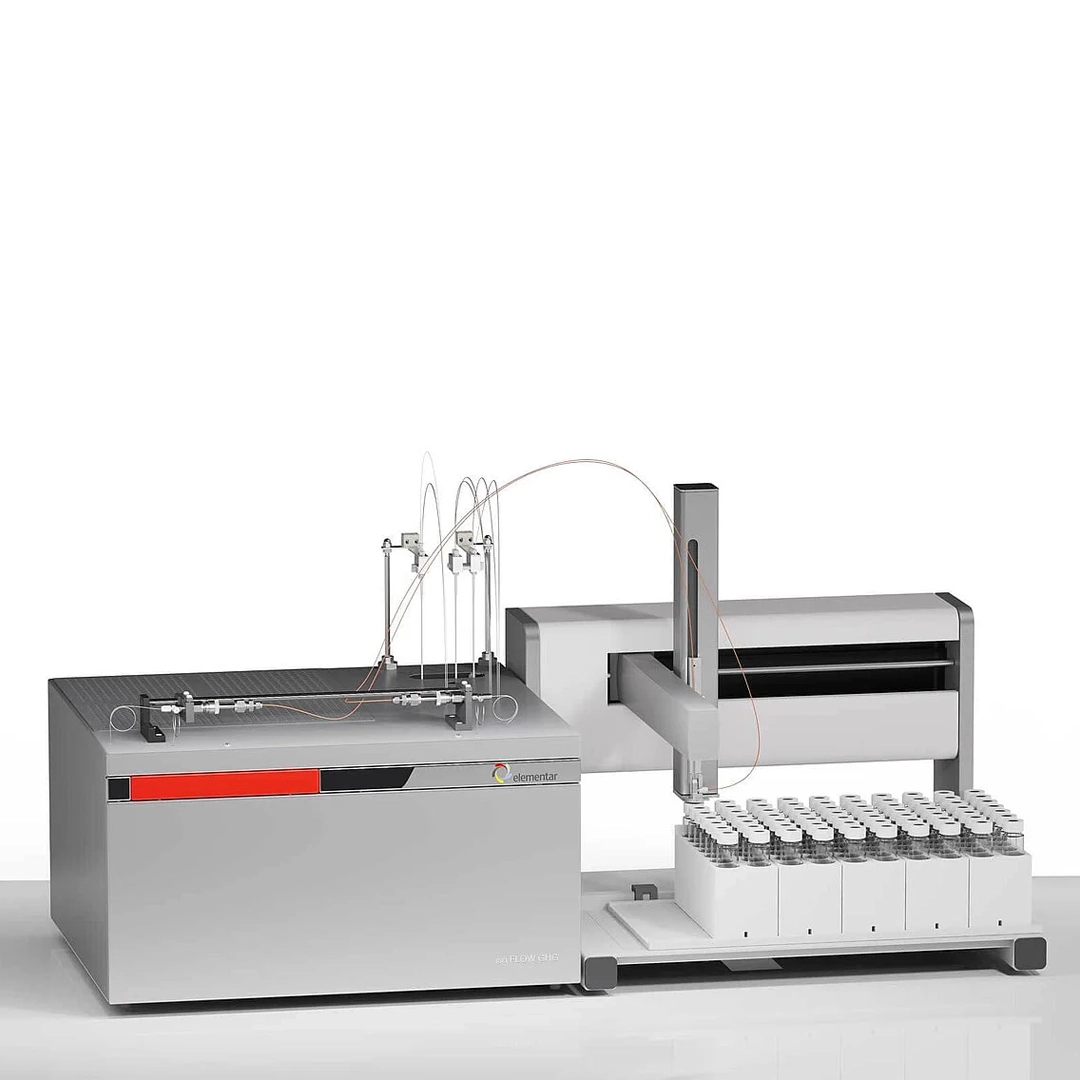
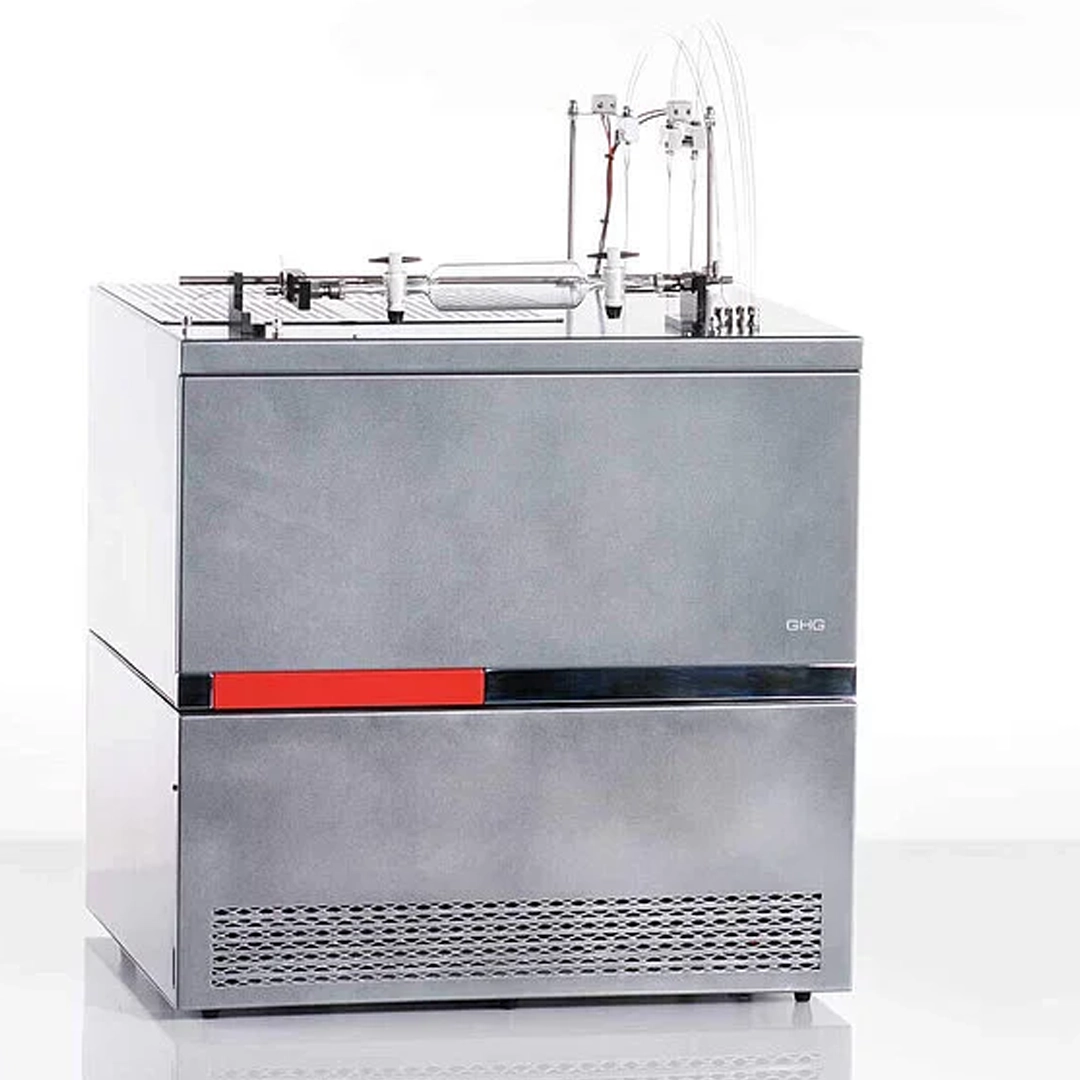

Isotope analysis of greenhouse gases
What is iso FLOW GHG?
Iso FLOW GHG by Elementar is a fully automated, continuous flow sample preparation system for isotope ratio mass spectrometry (IRMS), designed specifically for the analysis of trace greenhouse gases.
It enables high-precision isotope analysis of greenhouse gases originating from a wide range of environmental and experimental sample matrices. The system is widely used in climate science to investigate gas cycling processes and to better understand both natural and anthropogenic contributions to atmospheric greenhouse gas concentrations.
The main target gases include:
- Carbon dioxide (CO₂)
- Nitrous oxide (N₂O)
- Methane (CH₄)
These are present at trace levels in the atmosphere and require advanced pre-concentration and separation techniques for accurate isotopic analysis.
Why is isotope analysis important for greenhouse gases?
Isotopic analysis provides insight into the origin and transformation pathways of greenhouse gases in the environment. This makes it a key tool for climate research, allowing researchers to distinguish between natural and human-driven emissions.
The iso FLOW GHG system is ideal to support this type of analysis by enabling high-sensitivity measurement of low-concentration gases with minimal isotopic fractionation.
How does isotope analysis work for each gas type?
| Gas | Atmospheric context | Isotopic insight |
|---|---|---|
| Carbon dioxide (CO₂) | Atmospheric levels have increased significantly due to fossil fuel combustion | Depleted δ¹³C signatures distinguish anthropogenic and natural carbon sources and improve understanding of terrestrial carbon sinks |
| Nitrous oxide (N₂O) | Present at low concentrations (~330 ppb) with a global warming potential nearly 300× higher than CO₂ | Isotope analysis links major emission sources to agricultural activity and global nitrogen cycling |
| Methane (CH₄) | Concentrations have increased since 2007 from diverse natural and anthropogenic sources | Isotope analysis enables source attribution and investigation of feedback mechanisms in the methane cycle |
How does iso FLOW GHG handle trace gas analysis?
The system uses a combination of cryogenic pre-concentration, chemical trapping, and gas chromatography to isolate target greenhouse gases from complex atmospheric mixtures.
Key process steps include:
- Removal of atmospheric contaminants using helium purging
- Water vapor removal via membrane trapping
- Selective chemical trapping of interfering compounds (e.g. CO₂ removal for N₂O analysis)
- Cryogenic focusing of target gases
- Final delivery to the IRMS for isotope ratio measurement
For methane analysis, CO is oxidized to CO₂ prior to combustion, ensuring accurate δ¹³C determination.
What makes iso FLOW GHG suitable for climate research?
iso FLOW GHG is designed to handle a wide range of atmospheric and environmental applications, including:
- Atmospheric greenhouse gas monitoring
- Dissolved nitrate analysis in freshwater and seawater
- Mesocosm and microcosm studies
Its ability to isolate and concentrate trace gases ensures high analytical sensitivity, even at very low atmospheric concentrations.
Flexibility
The system can be adapted to different research needs and sample types.
It supports:
- 100 ml flow-through sample flasks for atmospheric gases
- Septum-sealed vials for liquid and dissolved gas samples
- Manual injection ports for direct gas analysis
- Optional XYZ autosampler for high-throughput vial analysis
Autosampler capacity:
- Up to 220 × 12 ml vials
- Or 70 × 20 ml vials
A dual-core needle system enables both gas purging and liquid sparging, improving flexibility across applications.
Analytical innovations
The system integrates multiple advanced technologies to improve performance and expand research possibilities.
Key innovations include:
- Capacity for up to two capillary GC columns (up to 30 m each)
- Heated GC oven with thermocouple control up to 300 °C
- Optional combustion furnace up to 1,500 °C
- Cryogenic focusing for enhanced separation of trace gases
- Optional liquid nitrogen refill system for extended runtimes
These features enable advanced chromatographic and combustion-based isotope workflows.
How does automation improve performance?
iso FLOW GHG is fully controlled via the lyticOS® Software Suite, which manages all analytical parameters.
Automation capabilities include:
- Flow and pressure control via electronic controllers
- Automated system checks and leak detection
- Method-driven configuration changes
- Sleep/wake functionality to reduce resource consumption
- Reduced operator interaction during analysis
This ensures high reproducibility while minimizing manual handling.
What sample types can be analyzed?
iso FLOW GHG supports a wide range of environmental and atmospheric samples, including:
- Atmospheric CO₂, N₂O, and CH₄
- Dissolved nitrates in freshwater and seawater
- Mesocosm and microcosm headspace gases