 English
 Dutch
 French

Protein determination by food type
Nitrogen and protein determination methods are well established in principle.
Every food matrix brings its own analytical logic
Nitrogen and protein determination methods are well established in principle, but every food matrix brings its own analytical logic, why it’s tested, what makes it difficult, which method and conversion factor apply, and what to watch for in sample prep. The guides below cover that reasoning for each category.
How is protein content determined in food?
Protein content in food is commonly determined by measuring nitrogen and converting the result into an estimated protein concentration.
The two principal nitrogen determination techniques are:
Kjeldahl method: Determines nitrogen through acid digestion, followed by conversion and measurement of ammonium-derived ammonia. It is widely used in standardized food and feed analysis.
Dumas combustion method: Determines nitrogen through high-temperature combustion and subsequent gas analysis. It offers rapid analysis and avoids the concentrated sulfuric acid digestion required by Kjeldahl.
Both methods measure nitrogen rather than protein molecules directly. Consequently, nitrogen from non-protein compounds may contribute to the calculated crude protein value.
Protein content is generally calculated using:
Protein content (%) = Nitrogen content (%) × Nitrogen-to-protein conversion factor
The conversion factor depends on the composition of the food protein and the reporting requirements. Although 6.25 is widely used for crude protein determination, other factors are applied to particular food categories.
Nitrogen-to-protein conversion factors by food type
Different food proteins contain different proportions of nitrogen. For this reason, the conversion factor used to calculate protein content can vary between food categories.
| Food type | Commonly used factor | Analytical consideration |
|---|---|---|
| Meat | 6.25 | Connective tissue, fat and homogenisation |
| Milk and dairy products | 6.38 | Non-protein nitrogen and true protein |
| Cheese | 6.38 | Fat, moisture and sample homogenisation |
| Milk powder | 6.38 | Moisture and nitrogen-based adulteration |
| Wheat and wheat flour | 5.70 | Moisture, grinding and grain quality |
| Other cereals | Depends on cereal and standard | Not all cereals use 5.70 |
| Soy | 5.71 or 6.25, depending on convention | Food-specific versus regulatory protein reporting |
| Pet food | 6.25 | Mixed ingredients and moisture |
| Animal feed | 6.25 | Non-protein nitrogen and formulation |
| Fish | 6.25 | Naturally occurring non-protein nitrogen |
| Mixed and novel foods | Matrix- or method-dependent | Different protein sources and nitrogen composition |
Important: These factors are general analytical references, not universally applicable requirements. Laboratories should use the conversion factor specified by the relevant standard, regulatory framework, product specification or validated analytical procedure.
Protein determination in meat
Protein determination in meat supports quality control, nutritional labelling, regulatory compliance, and the detection of non-meat protein addition in processed products. Because protein content is also used to assess product composition and formulation consistency, accurate nitrogen determination is an essential part of routine meat analysis.
Meat presents several analytical challenges. Fat content can make it difficult to obtain a representative, homogeneous sample, while the proportion of connective tissue varies considerably between cuts and products. Collagen, the primary protein in connective tissue, has a different amino acid composition from muscle protein. As a result, samples with a high collagen content can influence the relationship between measured nitrogen and calculated protein when a single conversion factor is applied.

Both the Kjeldahl and Dumas methods are established approaches for meat analysis. AOAC 981.10 describes a Kjeldahl method for crude protein in meat and meat products, while AOAC 992.15 covers nitrogen determination by combustion in meat products.
Dumas combustion offers shorter instrumental analysis times than traditional Kjeldahl workflows, making it suitable for laboratories processing large numbers of samples. Actual analysis time depends on the instrument, method and sample characteristics.
The commonly used nitrogen-to-protein conversion factor for meat is 6.25. Regardless of the analytical method used, representative sample preparation remains critical. Thorough grinding and homogenization help minimize variation caused by uneven fat distribution and differences in muscle and connective tissue, ensuring that the analyzed portion accurately represents the entire sample.
Protein determination in dairy (milk)

Protein determination in milk is essential for nutritional labelling, quality control, and payment systems throughout the dairy industry, where producers are often compensated partly based on protein content. Because milk protein directly influences the yield of products such as cheese and other dairy products, accurate protein measurement has both regulatory and economic importance.
From an analytical perspective, milk differs from many other food matrices because it naturally contains a significant non-protein nitrogen (NPN) fraction, including compounds such as urea and ammonia.
As both the Kjeldahl and Dumas methods measure total nitrogen rather than protein directly, crude protein values may overestimate the amount of true protein present. For applications where this distinction is important, particularly in dairy quality control and research, true protein is determined by correcting for non-protein nitrogen.
ISO 8968-1/IDF 20-1 specifies Kjeldahl-based nitrogen determination and crude protein calculation for milk and specified milk products. Other recognized methods may be applicable depending on the analytical objective.
Milk commonly uses a nitrogen-to-protein conversion factor of 6.38. Although liquid milk generally requires less mechanical sample preparation than solid foods, representative sampling and adequate mixing remain essential to ensure that fat and other components are evenly distributed.
Protein determination in cheese
Protein determination in cheese supports nutritional labelling, recipe standardization, and process control throughout cheesemaking. As whey is separated from the curd, the protein concentration changes in a predictable way, making protein analysis an important tool for monitoring product consistency and ensuring the final cheese meets quality specifications.
Compared with liquid dairy products, cheese presents a more challenging analytical matrix due to its higher solids content and variable fat and moisture composition. These characteristics can affect both sample homogenization and digestion efficiency, making representative sample preparation particularly important.

ISO 8968-1/IDF 20-1 covers Kjeldahl-based nitrogen determination for specified cheese categories, including hard, semi-hard and processed cheese. Laboratories should verify that the selected procedure is applicable to the particular cheese product.
A nitrogen-to-protein conversion factor of 6.38 is commonly used for dairy products. Because cheese is a solid, often fat-rich matrix, it generally requires more thorough homogenization than liquid milk before analysis.
Protein determination in milk powder

Protein determination in milk powder supports routine quality control, nutritional labelling and the investigation of potential adulteration. The 2008 melamine contamination incident highlighted the vulnerability of nitrogen-based protein determination to the deliberate addition of nitrogen-rich, non-protein compounds.
This remains an important analytical consideration for milk powder. Both Kjeldahl and Dumas measure nitrogen and therefore cannot independently establish whether all measured nitrogen originates from protein.
Where a distinction between protein nitrogen and non-protein nitrogen is required, additional analytical procedures are necessary. However, routine non-protein nitrogen determination alone should not be considered a comprehensive screening method for all possible adulterants.
Milk powder commonly uses a nitrogen-to-protein conversion factor of 6.38. Careful control of sample moisture is also important because moisture content affects powder handling and the comparability of protein results reported on an as-received or dry-matter basis.
Protein determination in cereals
Protein determination in cereals supports nutritional labelling, grain grading, and quality control, and in many markets directly influences the commercial value of grain. Protein content is also an important indicator of end-use suitability, helping to distinguish cereals intended for applications such as breadmaking, milling, or animal feed production.
From an analytical perspective, cereals present challenges related to moisture content, particle size and sample representativeness. Variations in moisture affect the comparability of results, while inconsistent grinding can influence the reproducibility of nitrogen determination.

ISO 20483 specifies Kjeldahl-based nitrogen determination for cereals and pulses, while ISO 16634-2 describes Dumas combustion for cereals, pulses and milled cereal products.
The appropriate nitrogen-to-protein conversion factor depends on the cereal and the analytical convention. For example, 5.70 is commonly used for wheat and rye products intended for human food, while 6.25 is used for several other products within the scope of ISO 16634-2.
Careful sample preparation, including uniform grinding and representative subsampling, is critical to ensure reliable nitrogen measurements.
Protein determination in wheat
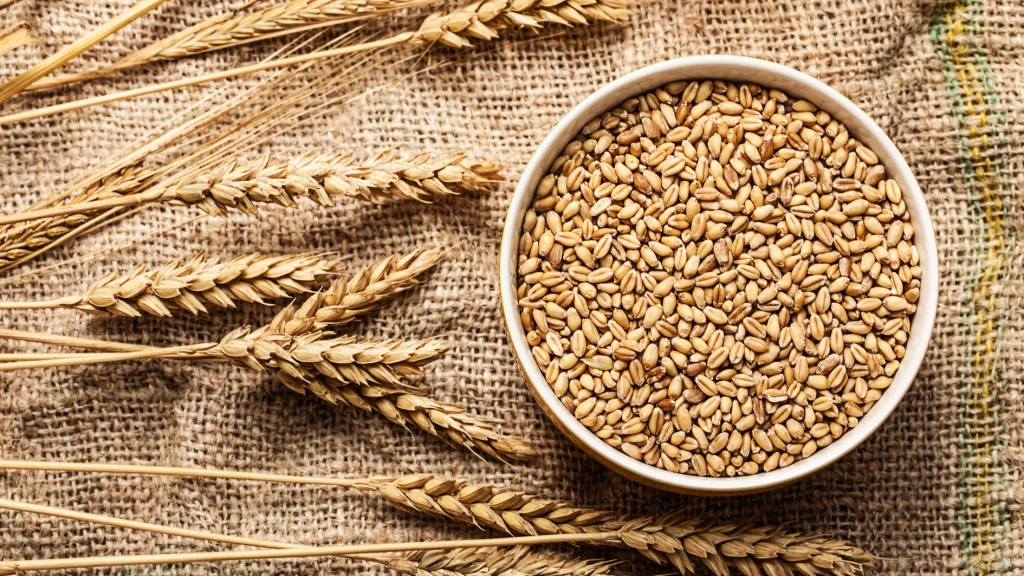
Protein determination in wheat is fundamental to grain grading, milling and baking quality assessment. Protein content is an important parameter for classifying wheat according to different end uses.
Gluten-forming proteins contribute to dough strength, elasticity and baking performance. Higher protein levels are often desirable for breadmaking, while lower protein levels may be preferred for certain cakes and pastries. However, protein concentration alone does not fully describe gluten quality or baking performance.
Although the analytical principles are the same as for cereals in general, wheat requires particular attention to moisture content and particle size. Moisture influences the comparability of protein results, while consistent grinding helps ensure representative sampling. ISO 20483 covers the Kjeldahl method, while ISO 16634-2 covers Dumas combustion.
A nitrogen-to-protein conversion factor of 5.70 is commonly applied to wheat intended for human food under relevant cereal analysis conventions. Moisture content and the reporting basis should be clearly specified when comparing wheat protein results between laboratories, suppliers or grain batches.
Protein determination in flour
Protein determination in flour supports nutritional labelling, quality control, and the production of consistent baking products. In commercial milling and baking, protein content is routinely monitored because it influences flour performance and helps ensure that products meet the specifications required for different applications, such as bread, cakes, or pastries.
Compared with whole wheat, flour is generally a more straightforward matrix to analyze because it has already been milled to a relatively uniform particle size. Nevertheless, representative sampling and homogenization remain important, particularly when comparing batches or suppliers.
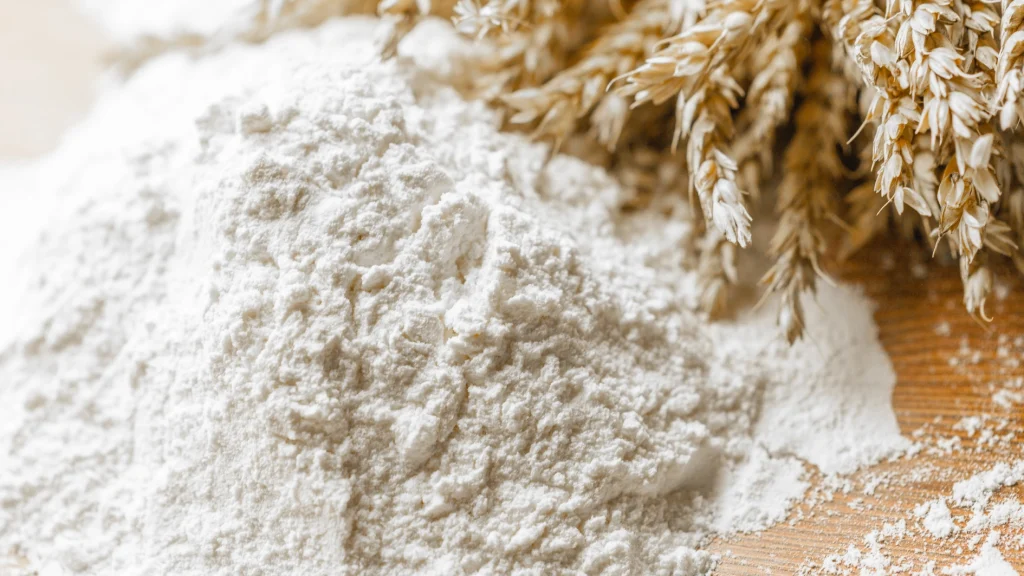
The same general reference methods used for wheat apply to wheat flour, including ISO 20483 for Kjeldahl and ISO 16634-2 for Dumas combustion. Wheat flour commonly uses a nitrogen-to-protein conversion factor of 5.70 under relevant cereal analysis conventions.
Because flour moisture varies, protein results should be compared on the same moisture basis. This is particularly important when evaluating flour specifications and baking performance.
Protein determination in bread
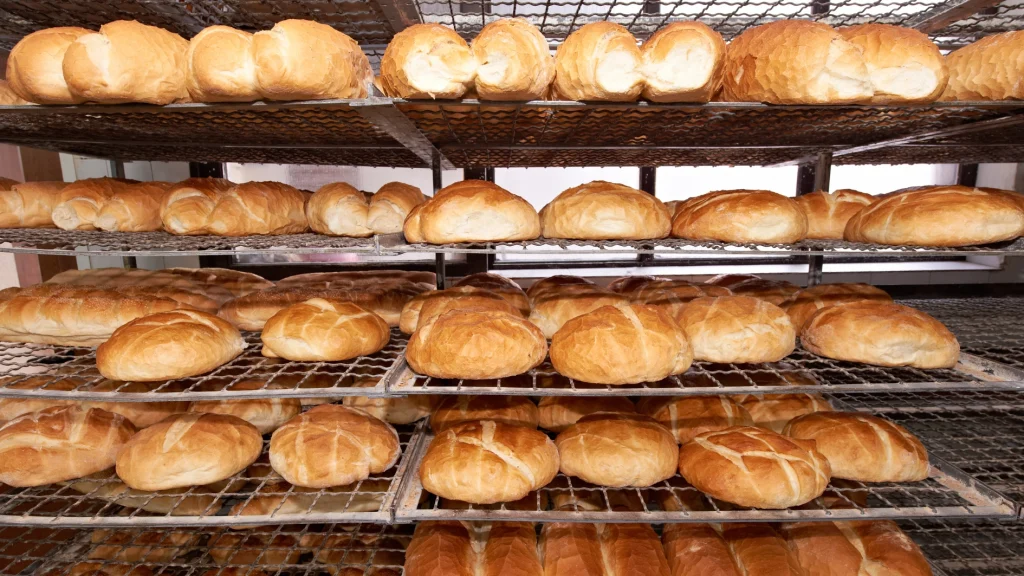
Protein determination in bread supports nutritional labelling, quality control and verification of the protein content in the finished product. Analyzing baked bread rather than flour alone is important because baking changes the moisture content of the product. Additional ingredients such as milk, eggs, seeds or protein concentrates may also contribute to the final protein concentration.
These changes make direct comparison with the original flour more complex.
Moisture loss during baking changes the concentration of remaining components on an as-received basis, while recipe variations mean that the protein content of finished bread cannot always be predicted from flour analysis alone.
Before nitrogen determination, bread samples should be thoroughly homogenised to obtain a representative test portion. Drying may be appropriate for some procedures, but any resulting moisture changes must be accounted for in the calculation and reporting of results.
For predominantly wheat-based products, a factor of 5.70 may be relevant under certain analytical conventions. However, mixed-ingredient bread products require consideration of the applicable reporting rules and protein sources, rather than automatically applying the wheat-specific factor.
Protein determination in soy
Protein determination in soy supports nutritional labelling, quality control, and the formulation of plant-based foods, where protein content is often a performance and marketing parameter.
Soy is widely used in meat analogues, dairy alternatives and protein ingredients. Accurate protein determination is therefore essential for regulatory compliance, ingredient specifications and product consistency.
Soy protein differs in amino acid composition from many other food proteins, making the choice of nitrogen-to-protein conversion factor important.

A soy-specific factor of approximately 5.71 is used in some analytical contexts, while 6.25 is also used under other established reporting conventions. The appropriate factor must therefore be selected according to the product, analytical standard and reporting requirements.
Both Kjeldahl and Dumas are widely used for nitrogen determination in soy. Thorough grinding and homogenization are important, particularly for whole soybeans and fat-containing soy ingredients.
Protein determination in pet food

Protein determination in pet food supports nutritional labelling, formulation, quality control, and regulatory compliance. Protein is an important nutritional parameter, with requirements varying according to animal species, life stage and the applicable nutritional framework.
Pet food presents a diverse analytical matrix. Dry kibble, wet food, semi-moist products, treats, and raw diets differ considerably in moisture content and composition.
Formulations may contain protein from multiple sources, including meat, cereals and soy. This makes the interpretation of crude protein results more complex than for single-ingredient products.
Kjeldahl and Dumas combustion are established approaches for crude protein determination in feed-related matrices. The laboratory should select a method that is validated and accepted for the relevant product and regulatory purpose.
A nitrogen-to-protein conversion factor of 6.25 is generally applied for crude protein reporting. Sample preparation should be adapted to the product type, with particular attention to moisture content when comparing wet and dry products.
Protein determination in animal feed
Protein determination in animal feed supports formulation accuracy, quality control and regulatory compliance. Because protein is a valuable nutritional component, accurate nitrogen determination is essential for nutritional consistency and cost-effective production.
Animal feed differs from many human food matrices because non-protein nitrogen is not always an indication of adulteration.
In ruminant feeds, compounds such as urea may be deliberately added as a nitrogen source. Rumen microorganisms can use suitable nitrogen sources to synthesize microbial protein under appropriate nutritional conditions.

Consequently, elevated non-protein nitrogen must be interpreted in the context of feed formulation, intended animal species and applicable safety requirements. ISO 5983-2 describes a Kjeldahl-based method for crude protein determination in animal feeding stuffs. Dumas combustion methods are also used for suitable feed matrices.
A nitrogen-to-protein conversion factor of 6.25 is generally applied for crude protein reporting. Representative sampling and thorough homogenization remain essential because animal feeds frequently contain ingredients with different particle sizes, densities and protein concentrations.
Protein determination in fish

Protein determination in fish supports nutritional labelling, quality control, and quality grading. Fish and seafood naturally contain non-protein nitrogen compounds, including free amino acids, nucleotides and, in many marine species, trimethylamine oxide (TMAO).
Since Kjeldahl and Dumas determine nitrogen rather than protein directly, these compounds may contribute to the calculated crude protein value. For applications requiring a distinction between crude and true protein, additional analytical procedures may be necessary.
Changes in certain nitrogen-containing compounds can also be relevant to seafood freshness assessment. However, crude protein determination itself should not be considered a direct measurement of freshness. Both Kjeldahl and Dumas are used for nitrogen determination in fish and seafood. A conversion factor of 6.25 is commonly applied for crude protein reporting.
Representative sampling remains important because differences in fat content, tissue composition and moisture between species can influence sample homogenization.
Protein determination in chocolate
Protein determination in chocolate is primarily driven by nutritional labelling and product composition verification. Chocolate contains protein from cocoa solids and, in milk chocolate, dairy ingredients. Its protein concentration and analytical behavior depend on the formulation.
The main analytical challenge lies in the complex matrix composition. High concentrations of fat and sugar can complicate representative sampling and may require method-specific handling to achieve reliable nitrogen determination.
Both Kjeldahl and Dumas methods can be used when the analytical procedure is suitable for the chocolate matrix and has been appropriately verified.

Kjeldahl digestion requires suitable conditions to ensure complete sample decomposition, while Dumas combustion requires appropriate sample mass, combustion conditions and homogenization. Because protein concentrations may be relatively low in some chocolate products, small absolute measurement differences can result in larger relative uncertainty. Thorough homogenization of the fat-rich matrix is therefore essential before analysis.
Protein determination in coffee

Protein determination in coffee is mainly relevant to compositional analysis, product characterization and selected research or quality control applications.
Coffee contains proteins and other nitrogen-containing compounds, including caffeine. This makes its nitrogen composition more complex than that of foods in which most measured nitrogen originates from protein.
Because Kjeldahl and Dumas are nitrogen-based techniques, non-protein nitrogen compounds can contribute to the measured result.
Consequently, crude protein calculated from total nitrogen may not represent the true protein fraction of coffee. Both Kjeldahl and Dumas may be applied when the procedure has been validated for the relevant coffee matrix. A factor of 6.25 may be used under certain crude protein reporting conventions, but its suitability should be verified.
Sample preparation is particularly important for roasted coffee because particle size, moisture and oil content can influence the representativeness of the analyzed portion. Fine, uniform grinding and adequate homogenization help improve measurement reproducibility.
Protein determination in plant-based foods
Protein determination in plant-based foods supports nutritional labelling, product development, quality control and the verification of protein-related product claims.
The main analytical challenge is the diversity of raw materials and product structures.
Plant-based foods can contain legumes, cereals, oilseed-derived ingredients, algae, fungi-based proteins and blended formulations. These matrices differ in amino acid composition, protein concentration and non-protein nitrogen content.
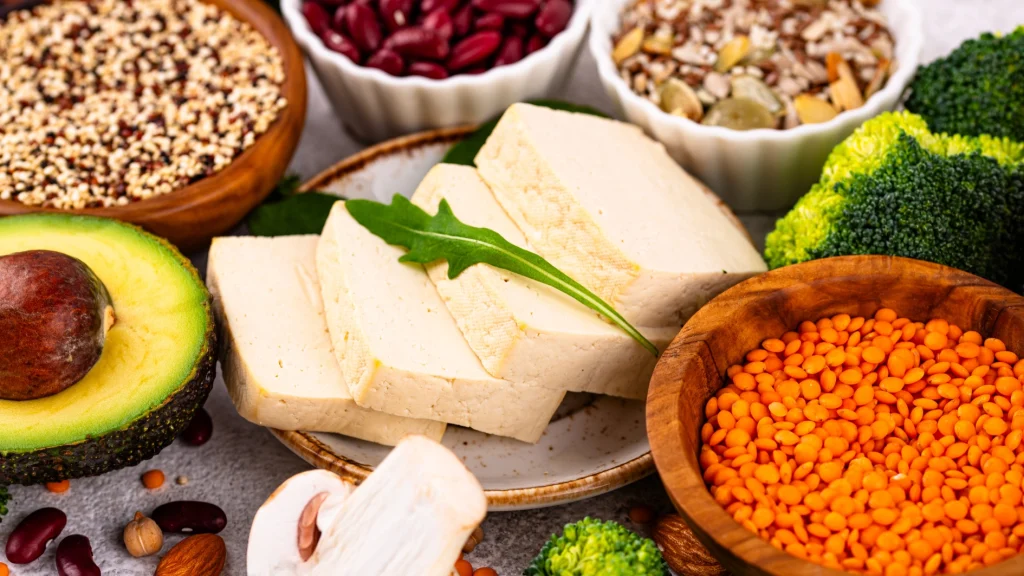
Both Kjeldahl and Dumas are widely used for crude protein determination. However, the interpretation of results requires particular attention to the nitrogen-to-protein conversion factor.
A general factor of 6.25 is often used under established reporting conventions, but matrix-specific factors may provide a different estimate of protein content. For products containing multiple protein sources, selecting a suitable conversion factor can be more complex.
Amino acid analysis can provide complementary information and may be useful when a more specific assessment of protein composition is required. Sample preparation depends on the product form. Protein isolates and concentrates require different handling from whole-food ingredients, while finished plant-based meat and dairy alternatives may contain fats, hydrocolloids and other components that complicate homogenisation.
Sample preparation
Sample preparation is highly dependent on product form. Isolates and concentrates generally require different handling than whole-food ingredients such as lentils or chickpeas, while finished plant-based meat or dairy analogues introduce additional complexity due to fat structuring, hydrocolloids, and multi-phase formulations. Achieving representative homogenization is therefore critical to ensure reproducible nitrogen results across such heterogeneous matrices.
Protein determination in insects

Protein determination in edible insects is relevant to novel food characterization, nutritional labelling and the substantiation of protein content claims.
Compared with conventional food matrices, insect-derived products present particular analytical challenges because their nitrogen is not derived exclusively from protein.
One important source of non-protein nitrogen is chitin, a nitrogen-containing polysaccharide found in insect exoskeletons. Because both Kjeldahl and Dumas determine nitrogen, chitin and other non-protein nitrogen compounds can contribute to crude protein estimates.
As a result, applying the conventional factor of 6.25 may overestimate protein content compared with estimates based on amino acid composition. Research has proposed lower nitrogen-to-protein conversion factors for certain insect species and products. However, the appropriate factor depends on the species, processing conditions and analytical approach.
Amino acid analysis can provide complementary information for evaluating protein content and assessing the suitability of nitrogen-based conversion factors. Sample form also influences analytical performance. Whole insects, insect powders and refined protein ingredients may require different homogenization and preparation procedures.
For commercial reporting, the applicable regulatory requirements and product-specific analytical method should take precedence over generalized conversion factors.
Protein determination in alternative proteins
Protein determination in alternative proteins, including cultivated meat, precision-fermented proteins and other novel protein sources, supports product characterisation, nutritional labelling and the substantiation of protein-related claims.
These emerging food categories present analytical challenges because their composition can differ significantly from conventional meat, dairy and plant protein ingredients.
Protein composition may vary depending on the production organism, cultivation or fermentation conditions, growth medium and downstream processing. One important challenge is selecting an appropriate nitrogen-to-protein conversion factor.

For novel protein matrices, a conventional factor of 6.25 may not accurately reflect the relationship between measured nitrogen and protein content. Non-protein nitrogen compounds can introduce additional uncertainty.
Kjeldahl and Dumas methods can be considered for nitrogen determination, provided that the analytical procedure is suitable for the specific matrix. Amino acid analysis may be useful as a complementary technique to assess protein composition and evaluate nitrogen-based estimates. Because these products are diverse, matrix-specific method verification and validation are particularly important for obtaining reliable and reproducible results.
Our solutions

N
rapid N exceed PLUS
A compact nitrogen and protein analyzer designed for fast, cost-efficient routine analysis. It uses the Dumas combustion method and supports solid and liquid samples weighing up to 1.5 g.

N
rapid MAX N exceed PLUS
A high-throughput nitrogen and protein analyzer for a wide variety of solid, liquid and semi-liquid samples. Its reusable crucibles accommodate samples up to 5 g or 5 ml, while automated operation supports efficient routine analysis.

Direct protein analyzer
SPRINT
The SPRINT measures protein directly using iTAG protein-tagging technology. It provides protein results for a broad range of food products in less than five minutes.
Discuss your food analysis requirements
Our Xperts are happy to discuss your application and help you find the right solution.
FAQ
Why is protein analysis important in meat products?
Protein analysis supports quality control, nutritional labeling, regulatory compliance, formulation verification, and the detection of non-meat protein additions in processed meat products.
Why is protein analysis important in cheese?
Protein analysis is used for nutritional labeling, process control, recipe standardization, and monitoring cheesemaking consistency.
Why is cheese more difficult to analyze than milk?
Cheese contains higher levels of solids, fat, and variable moisture, making homogenization and representative sampling more challenging.
Why do cereals use a lower conversion factor?
Cereal proteins contain higher concentrations of nitrogen-rich amino acids such as glutamine and proline, which changes the relationship between nitrogen and protein.
Why is wheat protein important?
Wheat protein strongly influences dough strength, gluten development, baking quality, and final product performance.
Is flour easier to analyze than whole wheat?
Yes. Flour has already been milled into a fine, homogeneous powder, making representative sampling easier.
Why analyze protein in bread instead of only flour?
Baking changes the composition of the final product through moisture loss and the addition of ingredients such as eggs, seeds, or dairy components.
Why is non-protein nitrogen sometimes acceptable in animal feed?
In ruminant nutrition, compounds such as urea can be intentionally added because rumen microorganisms convert them into microbial protein.
Why is fish different from meat in protein analysis?
Fish naturally contains relatively high levels of non-protein nitrogen compounds, which can increase crude protein values.
Can caffeine affect protein calculations?
Yes. Caffeine and other nitrogen-containing compounds contribute to total nitrogen and can slightly increase crude protein values.
Why is amino acid analysis becoming more important for plant-based proteins?
Amino acid analysis provides a direct measurement of protein composition and avoids errors caused by non-protein nitrogen.
