 English
 Dutch
 French

How to determine starch content using the Ewers method?
What is starch?
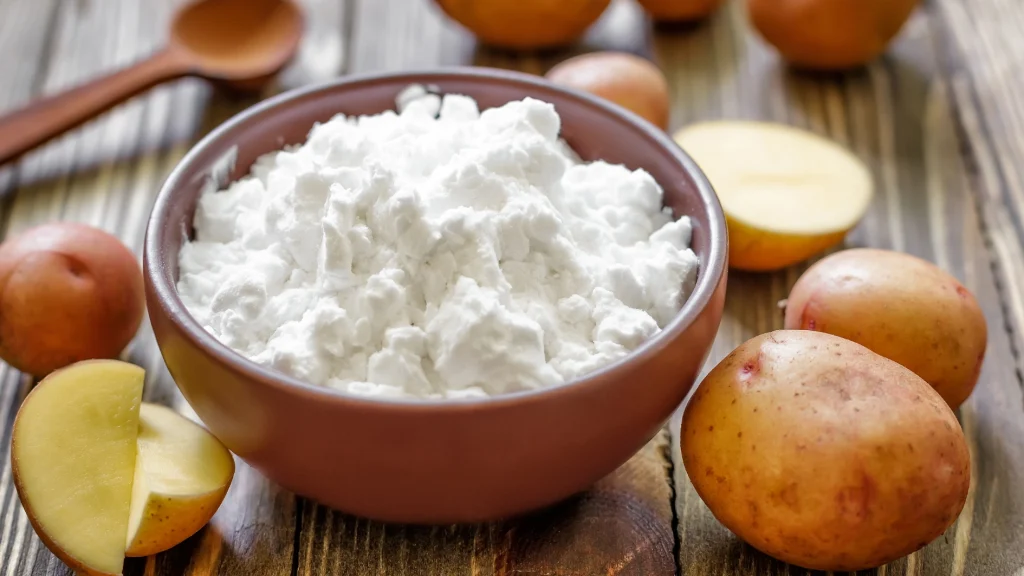
Starch is one of the most important ingredients in food manufacturing. It serves as a thickener, gelling agent, stabilizer, water binder, and texture modifier in a wide range of products, including bakery products, dairy alternatives, soups, sauces, snacks, and ready meals. Chemically, starch is a carbohydrate composed of glucose units and functions as the primary energy storage molecule in plants. It is naturally found in cereals, potatoes, rice, legumes, and many other crops.
Starch plays a central role in human nutrition and many industrial processes. As a primary energy source, starch is broken down during digestion into glucose units, which circulate through the bloodstream and provide energy to the body. Beyond direct nutritional use, starch derivatives such as glucose and fructose syrups are widely used as sweeteners in products including soft drinks, fruit beverages, beer, and other alcoholic beverages.
Because starch content influences product quality and process consistency, accurate starch determination is an important analytical requirement across multiple industries. One of the most precise approaches for starch analysis is based on optical rotation measurements.
What is the Ewers method for starch determination?
The Ewers method is a polarimetric technique for determining starch content. It measures the optical rotation of a sample after hydrolysis with hydrochloric acid.
The method relies on the optical activity of carbohydrates. These compounds rotate plane-polarized light, allowing laboratories to measure their optical rotation using a polarimeter. However, starch is not the only optically active substance in a sample. Soluble sugars and other carbohydrates may also influence the measurement.
To account for these substances, the Ewers method uses two measurements:
Total optical rotation: Measures optical activity after acid hydrolysis of the sample.
Optical rotation of ethanol-soluble substances: Measures interfering substances extracted with ethanol.
The difference between these measurements forms the basis for calculating starch content.
Starch determination according to Ewers - ISO 10520:1997
ISO 10520:1997 specifies the Ewers polarimetric method for determining the starch content of native starch.
The standard applies to native starch, except starch with a high amylose content. It does not apply to modified or pregelatinized water-soluble starch.
The Ewers method existed before the publication of ISO 10520 in 1997. The standard formalized a procedure for determining starch content through polarimetry.
How does starch determination according to Ewers work?
Accurate starch quantification requires careful sample preparation, acid hydrolysis, clarification, and optical rotation measurements. The procedure involves two parallel determinations.
1. Determination of total optical rotation
The first measurement determines the optical rotation of the hydrolyzed sample.
Sample preparation and hydrolysis
Approximately 2.5 g of the prepared sample is weighed and hydrolyzed using hydrochloric acid in a boiling water bath for 15 minutes.
During the initial heating phase, vigorous shaking is important to:
Prevent sample agglomeration
Promote uniform heating
Support complete hydrolysis
After hydrolysis:
Add 30 mL of cold water.
Cool the sample to 20 °C
Clarification using Carrez solutions
The solution is clarified through the sequential addition of Carrez solutions I and II. These reagents help remove proteins and other interfering compounds that could affect the optical measurement.
Carrez solution I
Chemical formula: K₄[Fe(CN)₆]·3H₂O
Typical preparation:
Dissolve 15 g potassium hexacyanoferrate(II) trihydrate in water
Dilute to 100 mL
Carrez solution II
Typical composition:
30 g zinc acetate dihydrate: Zn(CH₃COO)₂·2H₂O
3 mL glacial acetic acid
Dilute with water to 100 mL
Filtration and measurement
After clarification:
Dilute the solution to 100 mL with water
Filter the prepared solution
Measure optical rotation using a 200 mm polarimeter tube
The filtrate must be sufficiently clear for accurate optical measurement. If turbidity remains, investigate the clarification procedure before measurement. Any adjustment to reagent volumes should follow the validated method.
2. Determination of optical rotation of ethanol-soluble substances
The second measurement corrects for soluble sugars and other compounds that may influence the total optical rotation. This correction is important because these substances can contribute to the measured optical activity without representing starch.
Sample extraction
Approximately 5 g of sample is extracted using 80 mL ethanol. The sample is allowed to stand for one hour with intermittent shaking.
The extraction separates ethanol-soluble compounds from the remaining sample material.
Hydrolysis and clarification
After dilution with ethanol to 100 mL and filtration:
Transfer 50 mL of the filtrate
Hydrolyze the solution with hydrochloric acid
Heat under reflux for 15 minutes
Cool the sample to 20 °C
The solution is then:
Clarified using Carrez solutions I and II
Diluted to 100 mL with water
Filtered
Measured under the same polarimetric conditions
This correction enables laboratories to account for interfering optical activity when calculating starch content.
Important: The sample masses, ethanol concentration, reagent quantities, and measurement conditions must match the applicable analytical procedure. The steps above summarize the original laboratory workflow and should not replace a validated standard operating procedure.
How to calculate starch content using the Ewers method
The Ewers calculation uses the difference between total optical rotation and the optical rotation of ethanol-soluble substances.
The calculation presented in the original procedure is:
Starch (%) = 2000 × (α − α¹) / [α]ᴰ²⁰
Where:
α: Total optical rotation in degrees
α¹: Optical rotation of substances soluble in 40% ethanol
[α]ᴰ²⁰: Specific optical rotation of pure starch at 20 °C
The specific optical rotation depends on the botanical origin of the starch.
Note: This expression is specific to the stated sample preparation and measurement configuration. Laboratories must verify the calculation factor, sample masses, optical path length, and reporting basis against their applicable method.
Starch calculation using a circular polarimeter or saccharimeter
For starch determination, laboratories can use different types of polarimetric instruments. A conventional circular polarimeter reports optical rotation in angular degrees. Examples include the Polartronic V and VariPol. A saccharimeter, such as the Saccharomat V, reports measurements in °Z according to the International Sugar Scale.
Therefore, an additional conversion is required when using saccharimeter readings in the Ewers calculation.
Calculation using °Z readings
Starch (%) = [2000 / [α]ᴰ²⁰] × [(2N × 0.665)(Z − Z¹) / 100]
Which simplifies to:
Starch (%) = 26.6N(Z − Z¹) / [α]ᴰ²⁰
Where:
Z: Total optical rotation in °Z
Z¹: Optical rotation of ethanol-soluble substances in °Z
N: Normal sucrose mass in grams per 100 mL corresponding to 100 °Z under the defined reference conditions
[α]ᴰ²⁰: Specific optical rotation of pure starch at 20 °C
The appropriate conversion depends on the instrument’s scale and reference conditions. Laboratories should verify these parameters before reporting starch concentrations.
Why does starch source matter?
The specific optical rotation depends on the botanical origin of starch. Different starch types exhibit different characteristic optical rotation values. Knowing the starch source is therefore essential for accurate calculations.
Reference values from the original analytical procedure:
Starch source | Specific optical rotation |
Barley | +181.5° |
Maize | +184.6° |
Oat | +181.3° |
Potato | +185.7° |
Rice | +185.9° |
Wheat | +182.7° |
Tapioca | +183.6° |
Other starches | +184.0° |
The value for “other starches” applies to starch mixtures in compound feeding stuffs in the original procedure. These values should be checked against the applicable method before use.
Why is the correct optical rotation value important?
The specific optical rotation appears in the denominator of the starch calculation. Using an inappropriate reference value can therefore influence the calculated starch concentration. For accurate starch determination, laboratories should identify the botanical source and select the appropriate reference value.
Why use optical rotation for starch determination?
The Ewers method relies on polarimetry because hydrolyzed starch produces an optically active solution. A polarimeter measures the angle through which the solution rotates plane-polarized light.
Starch is a white granular organic substance produced by green plants. Commercial starch is often derived from maize, but other sources include:
Wheat
Tapioca
Rice
Potatoes
Because acid hydrolysis produces optically active carbohydrates, laboratories can relate the measured rotation to starch content.
Advantages of polarimetric starch analysis
The Ewers method offers several practical benefits:
Established analytical principle: the method uses optical rotation to quantify starch-derived carbohydrates.
Correction for interfering substances: a separate extraction accounts for ethanol-soluble optical activity.
Standardized methodology: ISO 10520:1997 describes a method for native starch determination.
Instrument-based measurement: polarimeters provide quantitative optical rotation readings.
However, results depend on sample preparation, hydrolysis conditions, optical clarity, instrument calibration, and the correct calculation factors.
Limitations of the Ewers method
Not every starch-containing sample is suitable for analysis under ISO 10520:1997. The standard excludes high-amylose starch and does not apply to modified or pregelatinized water-soluble starch. Laboratories analyzing complex foods, animal feed, or processed materials must select a method validated for their specific sample matrix.
Where is starch used?
Although starch is strongly associated with food production, its applications extend into many sectors. Across these industries, reliable starch determination remains a key component of quality control.

Food & beverage industry
Starch is widely used as a thickener, stabilizer, gelling agent, and texture modifier. It influences product properties such as viscosity, consistency, and texture.
Common applications include:
Bakery products
Soups and sauces
Dairy alternatives
Snacks and ready meals
Starch-derived sweeteners
Accurate starch analysis helps manufacturers monitor raw materials and maintain consistent product quality.

Pet food industry
Starch and starch-derived co-products are used in pet food manufacturing. Some starch-processing co-products contain high protein levels and can contribute to alternative protein formulations.
Native and modified starches are also used as:
Binders
Thickeners
Starch analysis can help manufacturers assess raw materials and monitor formulation consistency.

Paper industry
Starch products are commonly incorporated into:
Paper bags
Tissue papers
Packaging paper
Corrugated board
Stationery products
Typical process applications include:
Wet-end addition
Size press processes
Surface coating
Starch helps influence paper strength, surface characteristics, and processing performance.

Pharmaceutical industry
Starches serve several functions in pharmaceutical and related formulations.
They are used in products such as:
Toothpaste
Tablets
Emulsions
Lotions
Liquid medicines
Creams
Depending on the formulation, starch may function as a binder, disintegrant, or thickening agent. Starch-derived ingredients may also serve other purposes. The analytical method must match the starch type and formulation being tested.
Our solutions

Sugar analysis
Saccharomat V
A dedicated sugar polarimeter for accurate measurements in the sugar industry. Its quartz-wedge compensation technology provides stable results and reduces the need for recalibration.
Versatile polarimetry
Polartronic V
A versatile digital polarimeter for laboratory and industrial applications. It supports optical rotation, specific rotation and concentration measurements using selectable scales.

Pharma & more
VariPol
Provides modular polarimetry for pharmaceutical and chemical laboratories. It combines precise optical rotation measurements with integrated Peltier temperature control.
Discuss your application with our Xperts
Our Xperts are happy to discuss your application and help you find the right solution.
FAQ
What is the Ewers method for starch determination?
The Ewers method is a standardized polarimetric method for determining native starch content based on optical rotation. It is defined in ISO 10520:1997 and is widely used for accurate starch analysis in food, feed, pharmaceutical, and industrial samples.
Why is optical rotation used to measure starch content?
Starch is optically active and rotates plane‑polarized light. When starch is hydrolyzed into glucose, the optical rotation of the resulting solution can be measured using a polarimeter, making it a precise and reliable analytical method.
How is total optical rotation measured in the Ewers method?
The sample is hydrolyzed with hydrochloric acid in a boiling water bath, cooled, and clarified with Carrez reagents to remove proteins and impurities. The clear solution is then measured using a polarimeter.
How is starch content calculated using polarimetry?
Starch content is calculated using a formula based on the difference between total optical rotation and the optical rotation of ethanol‑soluble substances, adjusted by the specific rotation of pure starch.
Why is accurate starch determination important for quality control?
Starch content directly affects product quality, consistency, and process efficiency. Accurate measurement ensures compliance with standards and supports consistent product performance across industries.
What are the main benefits of the Ewers starch determination method?
The method provides high accuracy, reproducibility, and standardized results. It also allows correction for interfering substances and can be applied to a wide range of sample types in different industries.
