 English
 Dutch
 French

Plant-based protein analysis: methods and importance
Discover why accurate plant-based protein analysis matters for food quality control and how nitrogen determination supports reliable protein measurement.
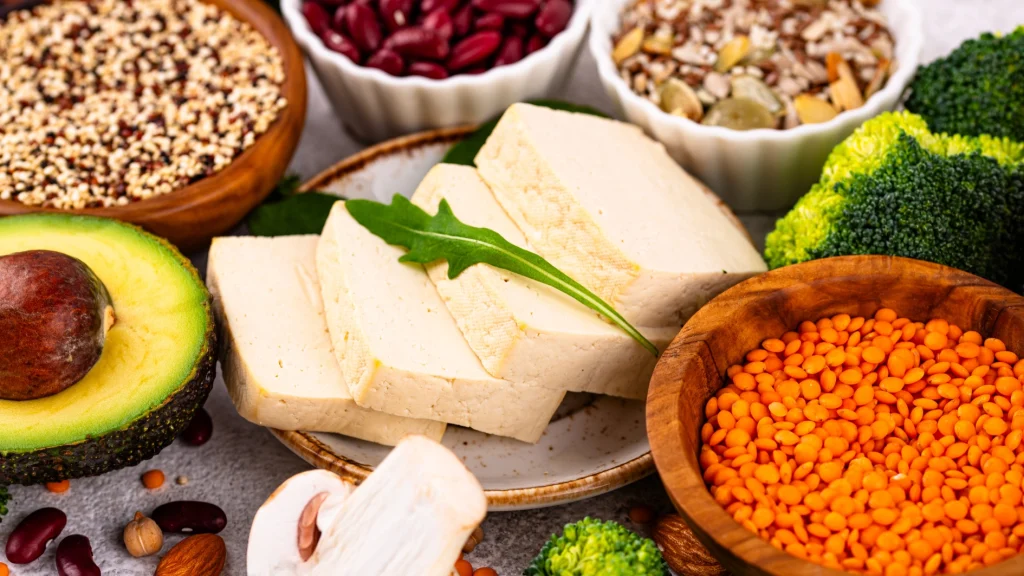
Plant proteins: a sustainable path to feeding the world
Plant proteins are increasingly recognized as a sustainable alternative to animal-based proteins. As the global population exceeds 8 billion, alternative protein sources are becoming essential for meeting future food demand. These include plants, insects, and algae, which can help reduce the environmental impact of food production.
Innovations such as regenerative agriculture and cellular agriculture support this transition. They aim to improve efficiency and sustainability in food production.
As the plant-based food industry develops, accurate plant-based protein analysis becomes increasingly important. Food manufacturers need reliable methods to determine protein content, maintain product quality, and develop new protein-rich foods.
The importance of accurate protein analysis
Reliable and efficient protein measurement is critical across the food production chain. Accurate nitrogen and protein determination helps manufacturers maintain consistency across ingredients with different protein contents.
Plant-based ingredients such as soy, peas, and wheat can vary in protein concentration. Reliable analytical methods help laboratories assess these differences and ensure consistent results.
Key reasons for precise protein analysis include:
Development of new plant-based food products: accurate protein measurements help manufacturers evaluate ingredients and optimize formulations.
Monitoring and maintaining food quality: routine analysis helps verify protein content and maintain consistency between production batches.
Optimizing production processes: protein determination helps manufacturers monitor production and identify variations in protein concentration.
For manufacturers specializing in alternative proteins, these tools enable greater laboratory efficiency and reliable quality control.

How is protein content determined in plant-based foods?
Laboratories commonly estimate protein content by measuring the nitrogen present in food samples. They then apply an appropriate nitrogen-to-protein conversion factor to calculate crude protein content.
Two established methods for nitrogen determination are Dumas combustion and Kjeldahl analysis.
Dumas combustion method
The Dumas method determines nitrogen content through high-temperature combustion. The analyzer measures nitrogen released from the sample and uses the result to calculate nitrogen concentration.
This method offers several advantages:
Rapid nitrogen determination
Automated analysis
No concentrated acid digestion
Suitable for various plant-based food samples
Dumas analysis is particularly useful for laboratories that require efficient sample processing and consistent nitrogen measurements.
Kjeldahl method
The Kjeldahl method determines nitrogen content through chemical digestion, followed by distillation and quantification.
It is an established technique for protein determination in food and feed laboratories. However, it requires chemical reagents and several analytical steps.
Both methods measure nitrogen rather than protein directly. Laboratories must therefore use an appropriate conversion factor to estimate protein content accurately.
Overcoming challenges in plant-based protein analysis
Plant-based ingredients can differ considerably in their composition. These variations can influence sample preparation and analytical requirements.
Laboratories working with alternative proteins may encounter several challenges:
Time-consuming sample preparation
Lengthy analysis procedures
Different protein concentrations across food matrices
High sample throughput requirements
The need for consistent and reproducible results
Selecting the right analytical equipment helps laboratories manage these challenges and maintain efficient workflows.
Our solutions

N
rapid N exceed PLUS
A compact nitrogen and protein analyzer designed for fast, cost-efficient routine analysis. It uses the Dumas combustion method and supports solid and liquid samples weighing up to 1.5 g.

N
rapid MAX N exceed PLUS
A high-throughput nitrogen and protein analyzer for a wide variety of solid, liquid and semi-liquid samples. Its reusable crucibles accommodate samples up to 5 g or 5 ml, while automated operation supports efficient routine analysis.

Direct protein analyzer
SPRINT
The SPRINT measures protein directly using iTAG protein-tagging technology. It provides protein results for a broad range of food products in less than five minutes.
Discuss your application with our Xperts
Our Xperts are happy to discuss your application and help you find the right solution.
FAQ
Why are plant proteins considered a sustainable solution?
Plant proteins require fewer resources, such as water, land, and energy, compared to animal-based proteins. They also produce significantly lower greenhouse gas emissions, making them an environmentally friendly choice for feeding a growing global population.
What challenges do manufacturers face with traditional protein analysis?
Common challenges include time-consuming sample preparation, lengthy analysis procedures, and complex instruments that slow down innovation and production.
What is plant-based protein analysis?
Plant-based protein analysis determines or estimates the protein content of plant-derived ingredients and food products. It supports product development, nutritional labeling, and quality control.
How is protein content measured in plant-based foods?
Laboratories commonly use Dumas combustion or Kjeldahl analysis to measure nitrogen content. They then apply a suitable conversion factor to estimate crude protein content.
Why is accurate protein determination important for plant-based foods?
Accurate protein determination helps manufacturers maintain product quality, evaluate raw materials, develop new formulations, and support nutritional labeling.
