 English
 Dutch
 French

Polarimeters
Polarimeters measure the optical rotation of substances to support quality control, concentration analysis and product characterization. Laboratories use polarimetry to analyze optically active compounds in pharmaceuticals, food products, sugar solutions and chemicals.
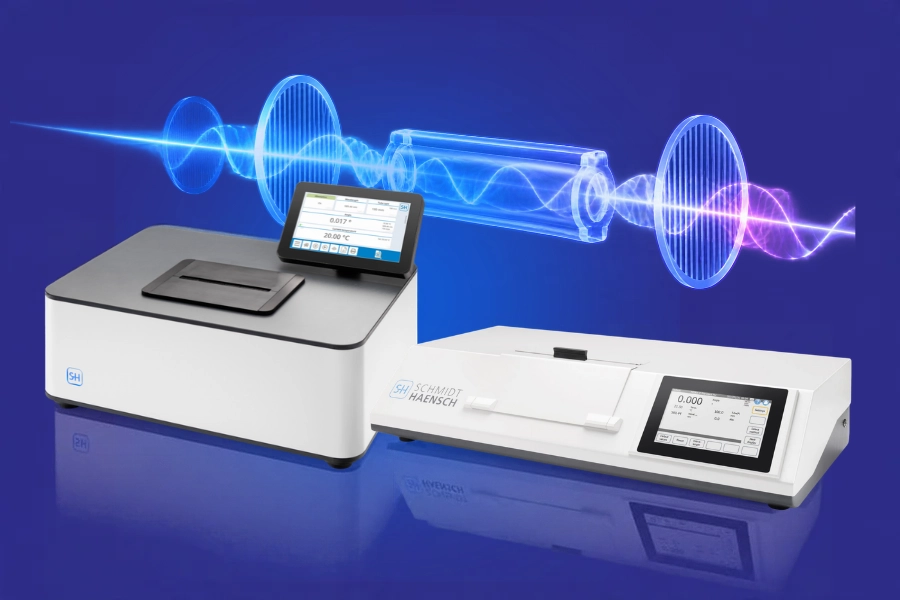
What is polarimetry?
Polarimetry is an analytical technique that measures how an optically active substance rotates the plane of polarized light.
Many compounds, including sugars, amino acids and certain pharmaceutical ingredients, interact with polarized light. Their molecular structure determines the direction and magnitude of optical rotation.
Polarimetric measurements provide valuable information about:
- Optical rotation: the angle through which a sample rotates polarized light
- Specific rotation: a characteristic value calculated using optical rotation, concentration and optical path length
- Concentration: the concentration of an optically active substance, when its specific rotation and measurement conditions are known
- Chiral composition: information about the relative proportions of enantiomers in suitable samples
- Sugar analysis: polarimetric measurements used to determine sugar content and support purity calculations
Polarimetry is widely used in pharmaceutical quality control, food analysis, sugar production and chemical research.

Polarimetry versus refractometry
Polarimetry and refractometry are both optical analytical techniques. However, they measure different physical properties.
Polarimetry measures the rotation of polarized light caused by optically active substances. Refractometry measures the refractive index of a sample.
Parameter | Polarimetry | Refractometry |
Measurement principle | Optical rotation | Refractive index |
Primary result | Rotation angle (°) | Refractive index (nD) |
Typical applications | Chiral compounds, sugar analysis, pharmaceuticals | Concentration analysis, Brix, liquid characterization |
Sample requirements | Optically active substances | Optically transparent or suitably measurable samples |
Main advantage | Information about optical activity | Rapid characterization of liquid composition |
In the sugar industry, laboratories often combine both techniques. Polarimetry measures the optical rotation associated with sucrose. Refractometry provides a Brix value representing soluble solids under the applicable measurement scale. Together, these measurements can support calculations of sugar purity. However, the interpretation depends on the sample composition and analytical method.
How does a polarimeter work?
A polarimeter measures the change in polarization angle when polarized light passes through an optically active sample. The instrument directs light through a polarizer and a sample tube. An optical detection system then determines the rotation caused by the sample. The measured angle depends on the substance, concentration, optical path length, wavelength and temperature.
Optical rotation measurement
Optically active molecules rotate the plane of polarized light clockwise or counterclockwise. The polarimeter measures this rotation in angular degrees (°). The result can help identify or characterize substances under defined measurement conditions.
Automatic digital polarimetry
Digital polarimeters automatically detect optical rotation and display the measurement result. Depending on the instrument, users can select measurement scales, configure methods and control sample temperature.
The Saccharomat V uses quartz-wedge compensation for specialized sugar analysis. The Polartronic V provides versatile optical rotation measurements across different applications.
The VariPol combines digital polarimetry with modular configurations and integrated temperature control.
Applications of polarimetry
Polarimeters support analytical laboratories across several industries. They provide information about optical activity, concentration and chiral composition.
Common applications include:
- Pharmaceutical quality control
- Chiral compound analysis
- Sugar production
- Food and beverage analysis
- Chemical manufacturing
- Starch analysis
- Pulp and paper industry
- Cosmetics and fragrances
The appropriate instrument depends on the sample type, required precision and analytical method.

Choosing a polarimeter
Selecting the right polarimeter depends on your application, measurement requirements and laboratory workflow.
Sample type and application
Start by identifying the substances you need to analyze. Sugar laboratories may require dedicated sugar scales and measurements of highly absorbing samples. Pharmaceutical laboratories often prioritize specific rotation, temperature control and traceable measurement records.
Measurement range and accuracy
Consider the expected optical rotation and the precision required by your analytical method. Routine quality control and demanding pharmaceutical measurements may require different accuracy levels. Check the manufacturer’s specifications under the relevant measurement conditions.
Wavelength selection
Optical rotation depends on the wavelength of the light source. Many methods use approximately 589 nm, corresponding to the sodium D-line. Other wavelengths may be necessary for specific substances or analytical applications. Some polarimeters offer additional wavelengths for specialized measurements.
Temperature control
Temperature can influence optical rotation and the calculated specific rotation. Accurate temperature control helps laboratories maintain consistent measurement conditions. This is particularly important when following standardized analytical methods.
Sample characteristics
Highly colored or absorbing samples can reduce the amount of light reaching the detector. For these applications, consider the instrument’s optical sensitivity and available wavelengths. Sample preparation and clarification may also be necessary.
Software and data management
Laboratories should consider data storage, user management and connectivity requirements. Pharmaceutical environments may require electronic records, audit trails and workflows supporting 21 CFR Part 11 compliance. The required functionality depends on the instrument configuration and software implementation.
Frequently asked questions
What does a polarimeter measure?
A polarimeter measures the angle through which an optically active substance rotates polarized light. Laboratories use this measurement to determine optical rotation, calculate specific rotation and support concentration analysis.
What is the difference between optical rotation and specific rotation?
Optical rotation is the measured angle of rotation for a particular sample. Specific rotation normalizes this result using the sample concentration and optical path length. Laboratories report specific rotation at defined temperatures and wavelengths.
Can a polarimeter determine sugar concentration?
Yes, polarimeters can determine sugar concentration in suitable samples using established relationships between optical rotation and concentration. In complex sugar mixtures, other optically active compounds can influence the result. The analytical method must account for these effects.
Why is temperature control important in polarimetry?
Temperature can affect optical rotation and specific rotation. Controlling sample temperature improves measurement consistency and supports comparisons with reference values.
Compare our polarimeters
SciSPX offers digital polarimeters for laboratories in Belgium, the Netherlands and Luxembourg. Our range includes instruments for sugar analysis, routine optical rotation measurements and pharmaceutical quality control.
Instrument | Main application | Key characteristics |
|---|---|---|
Saccharomat V | Sugar industry | Quartz-wedge compensation, °Z sugar scale, high long-term stability |
Polartronic V | General laboratory and industrial analysis | Versatile measurement scales, continuous measurement, multiple wavelength options |
VariPol | Pharmaceutical and chemical laboratories | Modular design, Peltier temperature control, software connectivity |
The Saccharomat V specializes in sugar polarimetry. The Polartronic V provides flexibility across several industries. The VariPol focuses on modular measurements and pharmaceutical workflows.
Find the right polarimeter
Explore our polarimeters to find an instrument that matches your analytical requirements.

Sugar analysis
Saccharomat V
A dedicated sugar polarimeter for accurate measurements in the sugar industry. Its quartz-wedge compensation technology provides stable results and reduces the need for recalibration.
Versatile polarimetry
Polartronic V
A versatile digital polarimeter for laboratory and industrial applications. It supports optical rotation, specific rotation and concentration measurements using selectable scales.

Pharma & more
VariPol
Provides modular polarimetry for pharmaceutical and chemical laboratories. It combines precise optical rotation measurements with integrated Peltier temperature control.
Not sure which polarimeter fits your application?
Our Xperts are happy to discuss your application and help you find the right solution.
