 English
 Dutch
 French

Microwave digestion systems
Microwave digestion systems use controlled microwave heating and acids to break down samples before elemental analysis. The resulting liquid digest can subsequently be analyzed using techniques such as ICP-MS, ICP-OES or atomic absorption spectroscopy.
What is microwave digestion?
Microwave digestion is a sample-preparation technique used to decompose solid and liquid samples in acid. Its purpose is to transfer the elements present in the sample into a solution that is suitable for instrumental analysis.
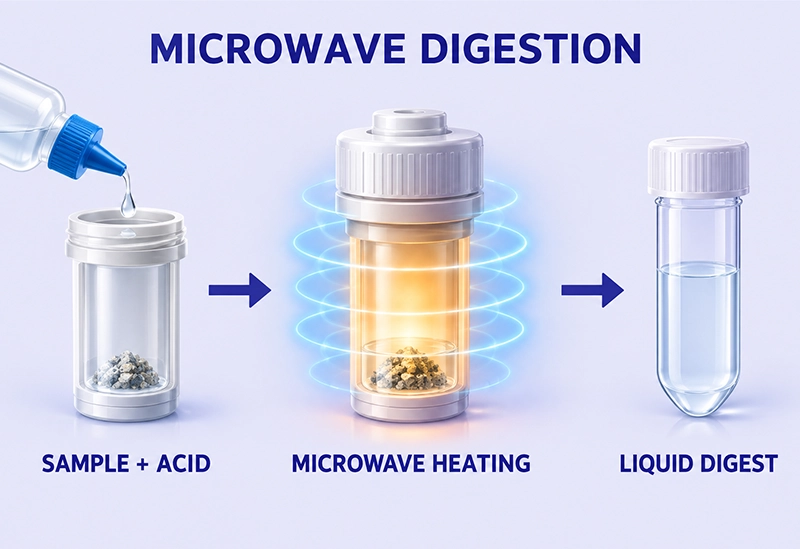
Samples are placed in microwave-compatible vessels together with one or more acids. Microwave energy heats the contents rapidly, accelerating the chemical reactions that break down the sample matrix.
Microwave digestion is commonly used before metals and trace-element analysis. The technique can provide faster and more controlled digestion than conventional hotplate or heating-block methods, particularly when closed vessels are used.
How does a microwave digestion system work?
A weighed sample is placed in a digestion vessel and combined with an appropriate acid or acid mixture. The vessel is then loaded into the microwave digestion system.
Microwave energy interacts with the vessel contents and generates heat. In a closed vessel, the resulting pressure allows the acid to reach temperatures above its normal boiling point. These elevated temperatures accelerate the decomposition of the sample.
The system controls the microwave power and monitors relevant digestion conditions. Depending on the instrument, samples are processed individually in sequence or together as a batch.
After digestion and cooling, the vessel is opened carefully. The resulting solution may be diluted or otherwise prepared before analysis by ICP-MS, ICP-OES, AAS or another suitable analytical technique.
The selected acids, temperature, pressure and digestion program depend on the sample matrix and analytical method.
Applications of microwave digestion
Microwave digestion is used in environmental, food, pharmaceutical, industrial and research laboratories.
Common samples and applications include:
- Food and agricultural products
- Soil, sediment and sludge
- Water and wastewater samples
- Metals, alloys and ores
- Ceramics and geological materials
- Plastics, polymers and oils
- Pharmaceutical products and raw materials
- Consumer products
- Lithium-ion battery materials
- Plant and animal tissue
- Hemp and cannabis samples
- Waste and recycling materials
The digestion method must be suitable for the sample matrix, target elements and subsequent analytical technique.

Choosing a microwave digestion system
Several practical and analytical factors should be considered when selecting a system.
Sequential or batch digestion
Sequential systems process individual vessels one after another. This format can be useful when a laboratory needs to combine different samples, acid mixtures and digestion methods within the same automated sequence.
Batch systems heat multiple vessels simultaneously under the same programmed conditions. They are particularly suitable when many similar samples must be prepared using the same method.
Sample throughput
Laboratories should consider the number of samples processed per day, typical batch sizes and required turnaround time. A high-capacity batch system can process up to 40 samples simultaneously, while an automated sequential system can continuously process mixed sample loads.
Sample matrix
Food, soil, polymers, metals and battery materials can require different digestion conditions. The selected system and vessel must provide the temperature and pressure required to digest the intended samples.
Acid compatibility
Digestion methods may use nitric acid, hydrochloric acid, hydrofluoric acid or other acid combinations. Vessel materials and system configurations must be compatible with the required reagents.
Vessel type and volume
Vessel volume, material and pressure capability influence the permitted sample quantity and digestion conditions. Laboratories working with varied applications may benefit from a system that supports several vessel types.
Method control and documentation
Temperature monitoring, programmed methods, sample tracking and run reports can support consistent operation and method documentation. These functions may be particularly important in routine and regulated laboratories.
Frequently asked questions
What is microwave digestion used for?
Microwave digestion is used to decompose samples in acid before elemental analysis. It converts the sample into a liquid solution that can be analyzed using techniques such as ICP-MS, ICP-OES or AAS.
Is microwave digestion an analytical technique?
No. Microwave digestion is a sample-preparation technique. It releases elements from the sample matrix, but a separate analytical instrument is required to measure their concentrations.
Which acids are used for microwave digestion?
The acids depend on the sample matrix and analytical method. Common reagents include nitric acid, hydrochloric acid and hydrofluoric acid. Some applications require a combination of acids.
What is the difference between open and closed-vessel digestion?
Open-vessel digestion takes place at atmospheric pressure, which limits the temperature to approximately the boiling point of the acid mixture. Closed vessels can develop pressure and reach higher temperatures, accelerating the digestion of difficult samples and helping retain volatile elements.
What is the difference between sequential and batch microwave digestion?
A sequential system processes individual vessels one after another and can accommodate different samples or methods within a sequence. A batch system heats several vessels simultaneously under the same programmed conditions.
Can all samples use the same microwave digestion method?
No. Digestion conditions depend on the sample matrix, sample quantity, target elements and analytical requirements. The selected acids, vessel type, temperature and program must be appropriate for the application.
What happens after microwave digestion?
After cooling, the digestion vessel is opened carefully. The resulting solution is commonly diluted to a defined volume and then analyzed by an elemental-analysis technique such as ICP-MS, ICP-OES or AAS.
Our microwave digestion systems
SciSPX supplies microwave digestion systems to laboratories in Belgium, the Netherlands and Luxembourg. The available systems include sequential and batch-based solutions for routine testing, high-throughput laboratories and demanding sample matrices.
The systems differ mainly in their digestion format, vessel options, sample capacity and degree of automation. Use the comparison below to identify which microwave digestion system best matches your laboratory requirements.
System | Digestion format | Sample capacity | Main characteristics | Best suited for |
|---|---|---|---|---|
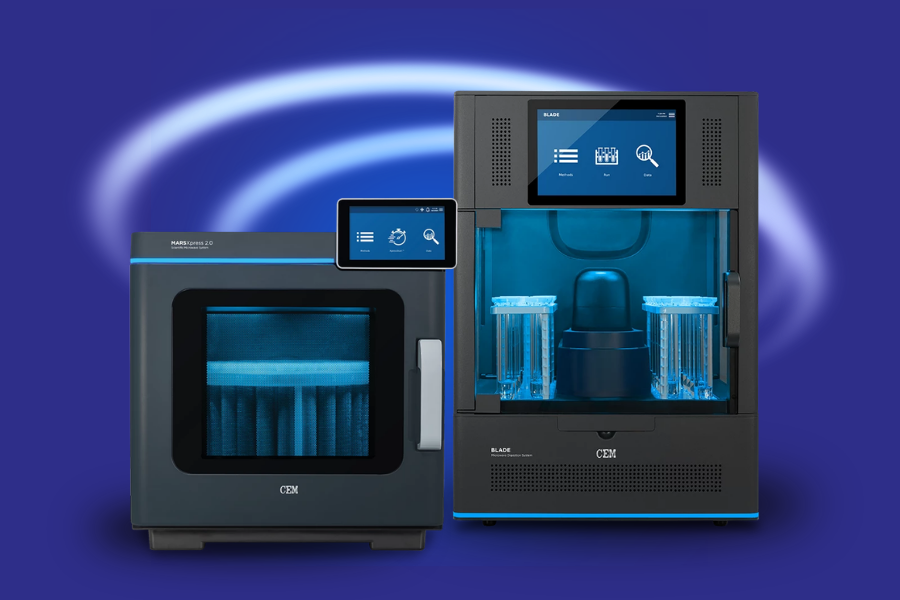
BLADE | Automated continuous-sequential digestion | Samples processed individually | Automatic vessel loading and unloading, rapid digestion and flexible sample sequencing | Laboratories processing varied samples, acids and methods |
MARSXpress 2.0 | Batch digestion | 1 to 40 samples | Straightforward programming, flexible batch size and vessels from 20 to 130 ml | Accessible routine digestion and high-throughput sample preparation |
MARS 6 | Batch digestion | Up to 40 samples | Vessel recognition, contactless temperature monitoring and broad vessel selection | Flexible routine and demanding digestion applications |
Find the right microwave digestion systems
Selecting a microwave digestion system starts with defining the sample matrices, acids, required throughput and digestion conditions. The choice between sequential and batch digestion also depends on whether samples are processed with the same method or require greater individual flexibility.
We can help you compare the available systems and select a configuration suited to your sample-preparation workflow.

Microwave digestion system
BLADE
An automated sequential microwave digestion system. It processes vessels individually and allows different samples and acid mixtures to be combined within one sequence.

Scientific microwave system
MARSXpress 2.0
A batch microwave system that can process between one and 40 samples. Its flexible vessel range makes it suitable for routine digestion across varied sample types.

Microwave digestion system
MARS 6
A flexible batch microwave digestion system for up to 40 samples. It recognizes the installed vessel type and sample count and provides contactless temperature monitoring during digestion.
Not sure which analyzer fits your application?
Our Xperts are happy to discuss your application and help you find the right solution.
