Refractometry and Polarimetry

Two key optical measurement techniques that play a key role in analyzing substances based on their interactions with light. 

Refractometry and Polarimetry

Refractometry and Polarimetry​

In scientific research and industrial quality control, precise measurement methods are crucial for ensuring product integrity and compliance. Two complementary optical techniques, refractometry and polarimetry, play a key role in analyzing substances based on their interaction with light.

What is Refractometry?

Refractometry is a quantitative, non-destructive technique based on the principle of light refraction. When light passes through media with different refractive indices, its path bends, a phenomenon called refraction. This property allows refractometers to measure the refractive index of substances, which correlates with concentration, density, and sometimes quality.

Applications

Refractometry is widely used in:

  • Food and beverage industry: Measuring sugar content (Brix), oils, fats, and alcoholic beverages.
  • Quality control: Determining purity and concentration in liquids and translucent solids.
  • Process monitoring: In-line measurements during production.

The refractive index depends on temperature and wavelength, so accurate measurements require controlled conditions. 

What is Polarimetry?

Polarimetry measures the rotation of polarized light as it passes through an optically active substance. Many organic and inorganic compounds, such as sugars, starches, and essential oils, are optically active because they contain chiral molecules. These molecules rotate polarized light by a specific angle, which is measured in degrees.

Factors influencing measurement

The observed rotation angle depends on:

  • Nature and concentration of the sample
  • Wavelength of light
  • Temperature
  • Sample tube length
 

Accuracy also relies on:

  • Sample preparation (solvent, homogenization)
  • Purity and stability of the sample
  • Consistent measurement conditions
 

Applications of polarimetry

Polarimetry is essential in:

  • Pharmaceutical industry: Determining enantiomer ratios for drug safety. Example: The thalidomide or softenon tragedy (1957–1961) highlighted the importance of enantiomer separation.
  • Sugar industry: Measuring sucrose purity. Sucrose has a specific rotation of +66.4°, glucose +52.7°, and fructose -92°. Polarimetry combined with refractometry ensures accurate purity analysis.
  • Food, chemistry, biology, and environmental sciences: Quality control and research.

Refractometry vs. Polarimetry

Aspect

Refractometry

Polarimetry

Principle

Measures changes in the direction of light (refraction) as it passes through a sample

Measures rotation of polarized light (optical rotation) by optically active substances

Main Measurement

Refractive index, concentration, or density

Angle of optical rotation, enantiomeric purity, chiral composition

Sample Requirements

Transparent liquid or solid samples

Optically active/chiral substances, often in solution

Applications

Quality control in food, beverages, oils, chemical and process industry

Pharmaceutical purity, sugar analysis, chiral molecule identification

Example Output Units

% Brix (for sucrose), refractive index, or other scales 

Degrees of rotation, specific rotation

These techniques complement each other:

  • Refractometry: Measures refractive index → concentration, density, quality.
  • Polarimetry: Measures optical rotation → chirality, authenticity, compliance.
 

For example:

  • Essential oils: Refractometry checks purity; polarimetry confirms composition.
  • Sugar solutions: Refractometry determines Brix; polarimetry verifies optical rotation.
 

Why use both?

Combining refractometry and polarimetry provides a complete picture of sample properties, critical for industries where purity and composition matter.

Our recommendations

SciSPX offers digital polarimeters for laboratories in Belgium, the Netherlands and Luxembourg. Our range includes instruments for sugar analysis, routine optical rotation measurements and pharmaceutical quality control.

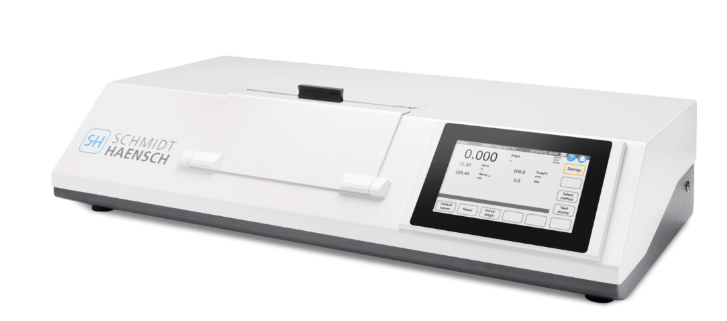
VariPol

The VariPol makes polarimetry faster than ever

Features: 

  • Basic polarimeter for pharmaceutical applications, 21 CFR Part 11 ready
  • Modular configuration
  • Multi-user concept and remote control via internet browser
  • Rapid measuring
  • Peltier system for automatic temperature control


modular polarimeter
circle polarimeter

Polartronic V

The fully automatic and high resolution allrounder polarimeter with continuous measurement
 
Features: 
  • Highly accurate and reproducible measuring results over the whole measuring range in no time at all
  • Continuous measurements for control of changes in concentration, depending on time or reaction
  • Easy to calibrate by certified Quartz Control Plates (SQCP, TQCP)

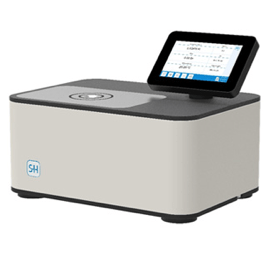
VariRef

Benchtop refractometer for fast and precise measurements
 
Features: 
  • Liquid and solid samples
  • Modular and connectable to network
  • Multi-point calibration for full measurement range
  • User friendly
Refractometer
Multi-wavelength refractometer

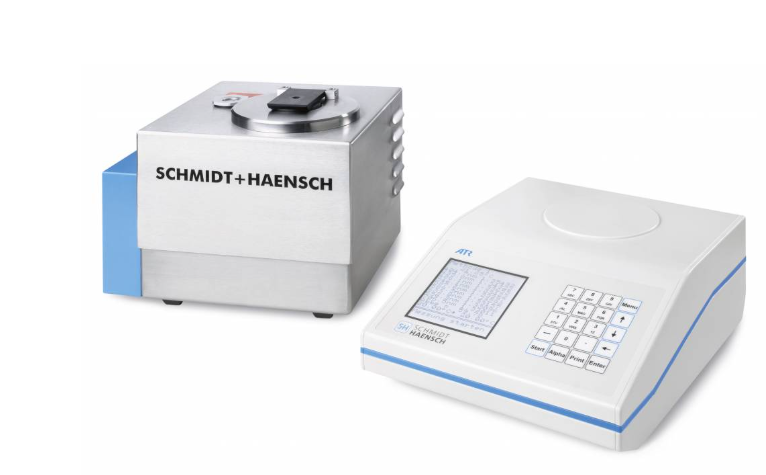
ATR-L Multi-wavelength refractometer

Digital multi-wavelength refractometer
 
Features: 
  • High-precision refractometer
  • Automatic dispersion measurement
  • Seven wavelengths fixed with full range of visible light
  • Ideal for research and development

Not sure which polarimeter fits your application?

Our Xperts are happy to discuss your application and help you find the right solution.

Frequently asked questions

What is refractometry?

Refractometry is a quantitative, non-destructive technique based on light refraction. It measures the refractive index of substances, which correlates with concentration, density, and sometimes quality.

When light passes through media with different refractive indices, its path bends—a phenomenon called refraction. Refractometers use this property to determine the refractive index.

Polarimetry measures the rotation of polarized light as it passes through an optically active substance containing chiral molecules.

For binary mixtures like sucrose in water, refractometers can directly display dry substance in % RTS using the Brix scale.

  • Pharmaceutical industry: Determining enantiomer ratios for drug safety.
  • Sugar industry: Measuring sucrose purity.
  • Food, chemistry, biology, and environmental sciences: Quality control and research.

Temperature and wavelength affect the refractive index, so controlled conditions are essential for accurate results.

Contact our Xperts

Prefer to give us a call?

The Netherlands
+31 (0)294 280 450

Belgium & Luxembourg
+32 (02)2 334 22 70