 English
 Dutch
 French

Nitrogen and protein analyzers
Nitrogen and protein analyzers determine the nitrogen concentration in solid, semi-liquid and liquid samples. The measured nitrogen content can also be used to calculate protein content using an appropriate conversion factor.
What is nitrogen and protein analysis?
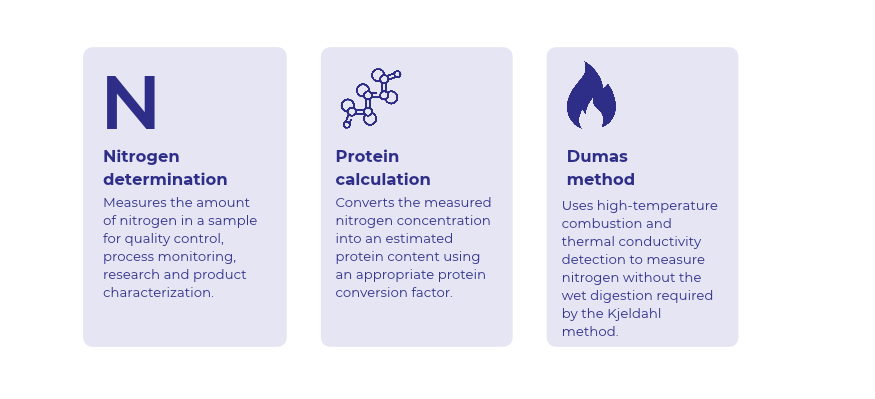
Nitrogen analysis determines the amount of nitrogen present in a sample. It is used in quality control, process monitoring, research and product characterization across several industries.
Because proteins contain nitrogen, the measured nitrogen concentration can be converted into an estimated protein content. This is done by multiplying the nitrogen result by a protein conversion factor. The appropriate factor depends on the sample type and analytical method.
This calculation provides the crude protein content. It assumes that the measured nitrogen originates from protein, although samples may also contain non-protein nitrogen compounds.
How does a nitrogen and protein analyzer work?
Nitrogen and protein analyzers based on the Dumas method use high-temperature combustion. A weighed sample is introduced into a furnace and combusted in the presence of oxygen.
During combustion, the nitrogen-containing compounds in the sample are converted into gaseous products. These gases undergo further treatment until the nitrogen is available in a measurable form. A thermal conductivity detector then measures the nitrogen concentration.
The analyzer calculates the nitrogen content based on the detector response and sample weight. When protein results are required, the measured nitrogen concentration is multiplied by the selected protein conversion factor. This automated process provides results within minutes and does not require the wet digestion used in the Kjeldahl method.
For CHNS analysis, the sample is combusted at high temperature. Carbon, hydrogen, nitrogen and sulfur are converted into gases such as carbon dioxide, water, nitrogen and sulfur dioxide. The gases are then separated and measured by suitable detectors.
Oxygen analysis follows a different process. The sample undergoes pyrolysis rather than combustion. Its oxygen is converted into carbon monoxide before separation and detection. The exact combustion, gas-separation and detection technology differs between instruments. Dedicated analyzers can therefore provide greater sensitivity or optimized performance for a particular element or sample type.
Applications of organic elemental analysis
Nitrogen and protein measurements support raw-material testing, nutritional analysis, quality control and process monitoring.
Common application areas include:
- Food and beverages
- Animal feed
- Dairy products
- Meat and meat products
- Cereals, grains and flour
- Plant-based foods and ingredients
- Fertilizers
- Soil and plant material
- Agricultural research
The sample type, expected nitrogen concentration, required throughput and degree of sample homogeneity help determine which analyzer is most appropriate.

Choosing a nitrogen and protein analyzer
Several practical and analytical factors should be considered when selecting an instrument.
Sample size and homogeneity
Larger sample quantities can be beneficial when materials are difficult to homogenize or when preparing a small representative portion is challenging. A smaller sample capacity may be sufficient for finely ground or homogeneous materials.
Sample consistency
Nitrogen and protein analyzers may be used for solids, liquids and semi-liquid samples. The required sample preparation and introduction method depend on the instrument.
Sample throughput
Routine and high-volume laboratories should consider the analysis time, autosampler capacity and possibilities for unattended operation. The ability to add or prioritize samples during a measurement sequence can also be important.
Operating costs
Carrier gas, consumables, sample preparation and maintenance all contribute to the cost per analysis. The most suitable configuration depends on the number and types of samples analyzed by the laboratory.
Analytical method and standards
The analyzer must be suitable for the relevant sample matrix and analytical method. Laboratories working according to recognized standards should confirm the required procedure, calibration and protein conversion factor for each application.
Dumas versus Kjeldahl nitrogen analysis
The Dumas and Kjeldahl methods both determine nitrogen and can be used to calculate protein content. However, they use different analytical principles.
The Kjeldahl method uses chemical digestion to convert organic nitrogen into ammonium. Further preparation, distillation and titration are required before the nitrogen concentration can be calculated.
The Dumas method uses high-temperature combustion followed by gas treatment and detection. It avoids wet-chemical digestion and enables automated analysis with results available within minutes.
The selected method should correspond with the sample, laboratory requirements and applicable analytical standard. Results from the two methods may differ when a sample contains forms of nitrogen that are not measured equally by both techniques.
Frequently asked questions
What does a nitrogen and protein analyzer measure?
A nitrogen and protein analyzer directly measures the nitrogen concentration in a sample. When a protein result is required, the instrument calculates the estimated protein content using a selected conversion factor.
How is protein content calculated from nitrogen?
Protein content is calculated by multiplying the measured nitrogen concentration by a protein conversion factor. The appropriate factor depends on the sample type and analytical method. The resulting value represents crude protein because non-protein nitrogen may also contribute to the measured nitrogen concentration.
What is the Dumas method?
The Dumas method determines nitrogen through high-temperature combustion. The sample is combusted in oxygen, after which the resulting gases are treated and the nitrogen is measured using a thermal conductivity detector. The process is automated and usually provides results within minutes.
Which nitrogen and protein analyzer should I choose?
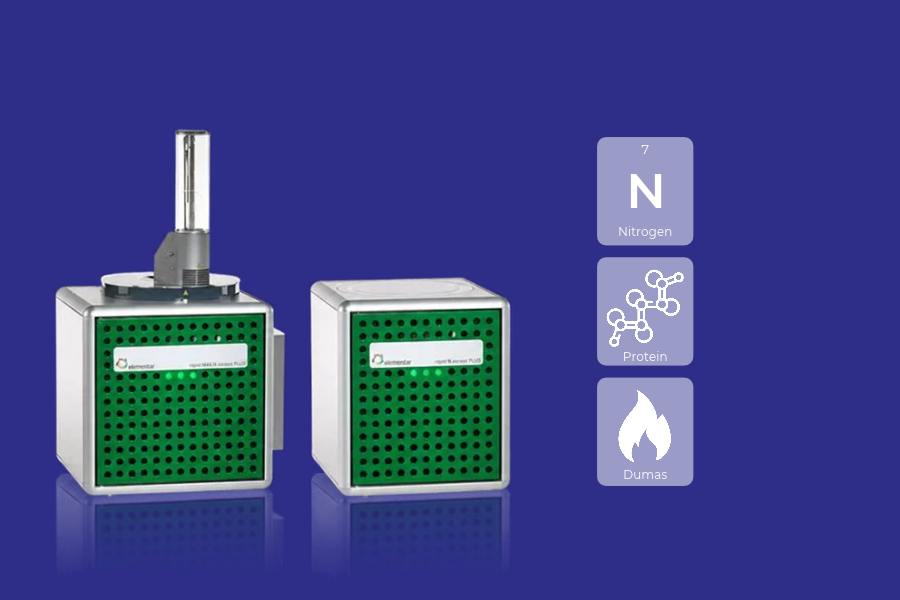
The rapid MAX N exceed PLUS is suited to laboratories requiring larger sample quantities, greater sample flexibility and continuous high-throughput operation. The rapid N exceed PLUS is a compact, cost-efficient option for routine analysis of samples up to 1.5 g or 1.5 ml.
What is the difference between the Dumas and Kjeldahl methods?
The Dumas method uses combustion and gas detection, while the Kjeldahl method relies on chemical digestion, distillation and titration. Dumas analysis avoids wet-chemical digestion and is suitable for fast, automated nitrogen determination. The appropriate method depends on the sample and applicable analytical standard.
Our nitrogen and protein analyzers
SciSPX supplies nitrogen and protein analyzers to laboratories in Belgium, the Netherlands and Luxembourg. The available systems use the Dumas combustion method and are designed for fast, automated nitrogen and protein determination.
The available systems differ mainly in sample capacity, preparation, carrier gas and intended laboratory workflow. Use the comparison below to identify which nitrogen and protein analyzer best matches your requirements.
Analyzer | Maximum sample size | Sample preparation | Analysis time | Best suited for |
|---|---|---|---|---|
rapid MAX N exceed PLUS | Up to 5 g or 5 mL | Samples placed in reusable crucibles | Approximately 5 minutes | Maximum sample flexibility, larger sample sizes, and continuous high-throughput operation |
rapid N exceed PLUS | Up to 1.5 g or 1.5 mL | Solids wrapped in tin foil or nitrogen-free paper; liquids sealed in tin capsules | Approximately 3–4 minutes | Compact, cost-efficient routine nitrogen and protein analysis |
Both analyzers provide automated nitrogen and protein determination using the Dumas combustion method. The main differences concern sample capacity, preparation, throughput and operating costs.
The rapid MAX N exceed PLUS is intended for laboratories requiring maximum sample flexibility, larger sample quantities and continuous high-throughput operation. The rapid N exceed PLUS provides a compact and cost-efficient solution for routine analysis of samples up to 1.5 g or 1.5 ml.
We can help you evaluate your samples, throughput requirements and analytical workflow to determine which configuration is most appropriate.
Looking for rapid protein analysis?
Explore systems for direct protein measurement and rapid moisture, fat and protein analysis in food and meat products.
Find the right nitrogen and protein analyzer
Selecting the right nitrogen and protein analyzer depends on your sample types, sample quantities and required throughput. We can help you compare our systems and select a configuration suited to your analytical requirements.

N
rapid MAX N exceed PLUS
A high-throughput nitrogen and protein analyzer for a wide variety of solid, liquid and semi-liquid samples. Its reusable crucibles accommodate samples up to 5 g or 5 ml, while automated operation supports efficient routine analysis.

N
rapid N exceed PLUS
A compact nitrogen and protein analyzer designed for fast, cost-efficient routine analysis. It uses the Dumas combustion method and supports solid and liquid samples weighing up to 1.5 g.
Not sure which analyzer fits your application?
Our Xperts are happy to discuss your application and help you find the right solution.
