 English
 Dutch
 French

Belgium is a European leader in the recycling of plastic packaging and construction materials
Intro
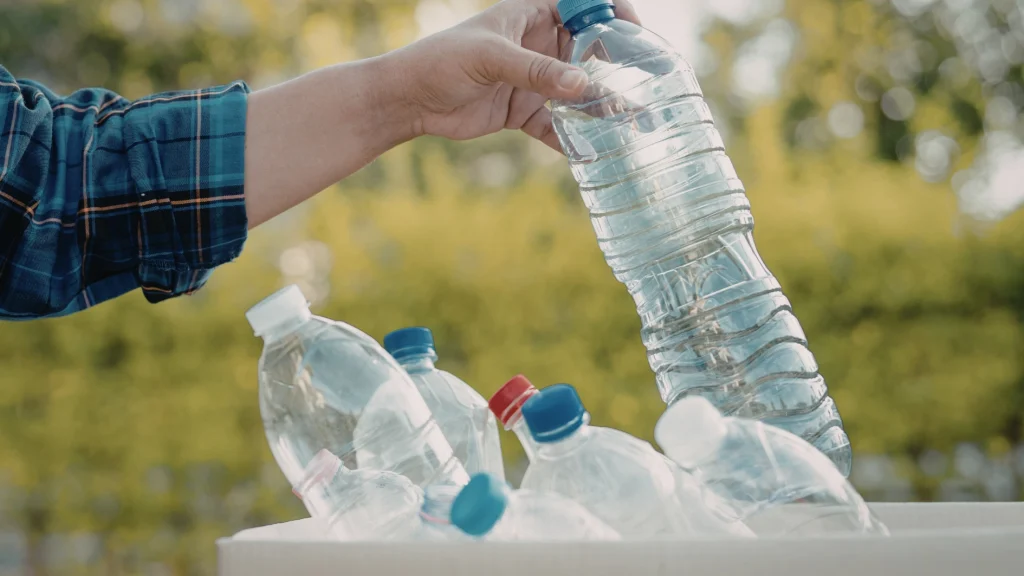
Belgium leads Europe in the recycling of plastic packaging and construction materials. An impressive achievement, but beneath the surface, the sector is under real pressure. A Benelux comparison reveals where the opportunities lie and what is at stake.
The numbers that matter
According to the latest biennial report from Plastics Europe, 61% of all plastic packaging in Belgium is recycled, the highest rate in Europe, well above the EU average of 40.5%. Belgium also tops the rankings for construction materials, with a recycling rate of 29% compared to the European average of 18.6%.
And this is no one-off peak. Over the past decade, the total volume of plastic recycled in Belgium has nearly doubled: from 136 kilotons in 2014 to 264 kilotons in 2024. That is the result of years of investment in collection infrastructure, sorting technology, and an industry that puts quality first.
Across all plastic waste streams, including agriculture, automotive, electronics, and consumer goods, Belgium ranks second in Europe with an overall recycling rate of 41%, just behind Spain. One important nuance: in Spain, as much as 35% of plastic waste still ends up in landfill. In Belgium, that figure is barely 2%. Our position is not just strong in volume, it is strong in quality.
How does the rest of the Benelux compare?
The Netherlands
The Netherlands also performs above the European average. In 2024, 55.4% of plastic packaging waste was recycled, lower than Belgium, but well above the EU average. The overall recycling rate for all plastic waste stands at 37%, placing the Netherlands among the better-performing European countries.
There is, however, a serious caveat: a large share of collected plastic still ends up in incinerators. In 2024, 62.7% of all collected plastic waste was incinerated, a figure that sits uneasily with circular economy ambitions. Valuable raw materials are lost in the process, along with the opportunity to further reduce CO₂ emissions.
Luxembourg
Luxembourg has set ambitious legislative targets: 50% recycling of plastic packaging by 2025 and 55% by 2030. Legislation has been tightened and infrastructure is developing, but the comparison with Belgium and the Netherlands shows there is still meaningful room to grow, both in collection rates and processing capacity.
Quality as the decisive factor
High recycling percentages are one thing, but the real value of recycled plastic lies in the quality of the resulting raw material. The purer, more homogeneous, and more consistent the stream, the more valuable the recyclate for new applications.
Contamination from other polymers, adhesive residues, moisture, or food waste reduces mechanical properties and limits where the material can be used. A batch that fails to meet quality standards ends up in lower-grade applications, or gets incinerated after all.
That is precisely why quality analysis is not a side issue, but a strategic lever. Recyclers who rigorously characterise their materials, assessing polymer composition, contamination, melt behaviour, thermal stability, and processability, can command better prices, build more stable sales channels, and meet the increasingly strict requirements of customers and regulators. In a market that takes circular materials seriously, that is a decisive competitive advantage.
Competitiveness pressures in the European plastics industry
Behind the headline rankings, a worrying trend is emerging. Belgian plastics processing saw a production decline of 9.5% between 2022 and 2024, more than three times the European average of 3.1%. High energy costs and rising raw material prices are weighing heavily on competitiveness. That has translated into job losses: more than 1,280 positions were lost in the Belgian plastics sector over the past two years.
The global picture is even starker. Europe’s share of worldwide plastics production has fallen from 22% in 2006 to just 12% in 2024. Over the same period, China’s share grew from 21% to 35%.
Chemical recycling: the next frontier
To push recycling rates higher and reduce dependence on fossil raw materials, chemical recycling is emerging as a key technology. Complementary to mechanical recycling, it produces highly pure feedstocks that are qualitatively comparable to virgin material, suitable for demanding applications such as food packaging and medical devices.
But the current policy framework in Belgium and Europe is holding back investment. While China and the United States are actively scaling up chemical recycling capacity, Europe, and Belgium, risk giving away their technological edge through overly rigid legislation and potential levies. Industry federation essenscia PolyMatters is unequivocal: without a policy breakthrough, we risk squandering our lead and ceding the opportunity to other regions.
Analytical testing in plastic recycling
The central challenge in plastics recycling is not collection, but the transformation of heterogeneous waste streams into consistent, specification-grade industrial materials. Achieving this requires analytical control throughout the entire value chain, from incoming material verification to final batch release.
Rather than relying on a single measurement, recyclers combine multiple analytical techniques to understand composition, stability and processability at different stages of the recycling process.
1. Incoming material identification and sorting
At the front end of the process, the priority is to determine what the waste stream actually contains.
Near-infrared spectroscopy (NIR) is widely used for high-throughput polymer identification in sorting facilities. It enables rapid separation of common polymers such as PE, PP and PET without sample preparation.
Where more detailed information is required, Fourier-transform infrared spectroscopy (FTIR) provides higher resolution identification. FTIR is particularly effective for detecting mixed polymers, additives, surface contamination and materials that are difficult to classify using NIR alone.
Together, these techniques ensure that incompatible plastics are removed early in the process, reducing downstream variability.
2. Thermal behavior and material stability
Once a material stream has been sorted, thermal analysis is used to evaluate whether it can withstand reprocessing conditions.
Differential scanning calorimetry (DSC) is used to study melting and crystallisation behaviour. It provides insight into polymer structure, blending effects and thermal history, all of which influence processing stability and final product performance.
Thermogravimetric analysis (TGA) complements this by measuring thermal degradation, filler content and residual mass fractions. This is essential for determining processing limits and verifying the presence of additives such as fillers, flame retardants or reinforcing agents.
3. Processability and batch consistency
Even when a material is correctly identified and thermally stable, it must still perform consistently during processing.
Melt flow index (MFI/MFR) testing is a key parameter used to assess flow behaviour under defined conditions. It is one of the most practical indicators of whether recycled material can be processed reliably in extrusion or injection moulding applications.
Variations in MFI between batches are often an early sign of degradation, contamination or inconsistent feedstock composition.
4. Moisture, density and final quality control
Some of the most critical quality risks in recycled plastics are not visible.
Moisture content is particularly important for hygroscopic polymers such as PET, PA and PC. Excess moisture leads to hydrolysis during processing, reducing molecular weight and causing defects in final products.
Density measurement provides a fast and reliable cross-check for polymer identity and blend composition, while contamination analysis ensures that non-polymer residues or incompatible materials are detected before batch release.

Quart Halogen Mositure Analyzer
The fastest moisture analyzer on the market, 3x faster than traditional IR and halogen drying systems.

NextGen Muffle Furnace
Ash up to 15 samples at once and 97% faster than with traditional muffle furnaces.
5. From analysis to industrial reliability
When combined, these analytical methods form a control system that transforms recycling from a volume-based operation into a quality-controlled manufacturing process.
Recyclers that implement systematic material characterisation are better able to:
- Ensure batch-to-batch consistency
- Meet increasingly strict customer specifications
- Document material properties for regulatory compliance
- Support traceable and certified recyclate supply chains
As recycled content requirements increase and digital product passport systems emerge across Europe, analytical data is becoming a defining element of market access rather than a technical afterthought.
FAQ
How much plastic waste is recycled in Belgium?
Belgium recycled approximately 264 kilotons of plastic in 2024, nearly doubling its recycling volume compared to 136 kilotons in 2014. This growth reflects long-term investments in sorting infrastructure, collection systems, and recycling technologies.
How does Belgium compare to other European countries in plastic recycling?
Belgium ranks among the top countries in Europe with an overall plastic recycling rate of 41%, just behind Spain. However, Belgium distinguishes itself through very low landfill rates, with only about 2% of plastic waste landfilled compared to significantly higher figures in other countries.
How does the Netherlands perform in plastic recycling?
The Netherlands also performs above the EU average with a plastic packaging recycling rate of 55.4%. However, a major difference is that a large share of plastic waste is incinerated, with 62.7% of collected plastic being burned, reducing material recovery.
What is the status of plastic recycling in Luxembourg?
Luxembourg has ambitious recycling targets, aiming for 50% plastic packaging recycling by 2025 and 55% by 2030. However, it is still developing its collection infrastructure and processing capacity compared to Belgium and the Netherlands.
Why is quality critical in plastic recycling?
The value of recycled plastic depends heavily on its quality. High‑quality recyclates are pure, consistent, and free from contamination, which allows them to be reused in higher‑value applications.
What challenges does the Belgian plastics industry face?
Despite strong recycling performance, the Belgian plastics sector is under pressure due to high energy costs and raw material prices. Production declined by 9.5% between 2022 and 2024, leading to job losses.
Why is analytical testing essential in plastic recycling?
Analytical testing ensures that recycled materials meet quality and performance standards. It helps transform recycling from a volume‑based activity into a controlled manufacturing process.
What techniques are used to identify plastic materials?
Near‑infrared spectroscopy is used for fast sorting of common polymers, while Fourier‑transform infrared spectroscopy provides more detailed identification, including contaminants and additives.
Why is moisture control important in recycling plastics?
Moisture can cause degradation during processing, especially in polymers like PET or polyamide. Controlling moisture prevents defects and ensures consistent product quality.
What is plastic recycling quality control?
Plastic recycling quality control is the process of analyzing composition, contamination, and performance properties to ensure recycled materials meet industrial standards.
