English
 Dutch
 French

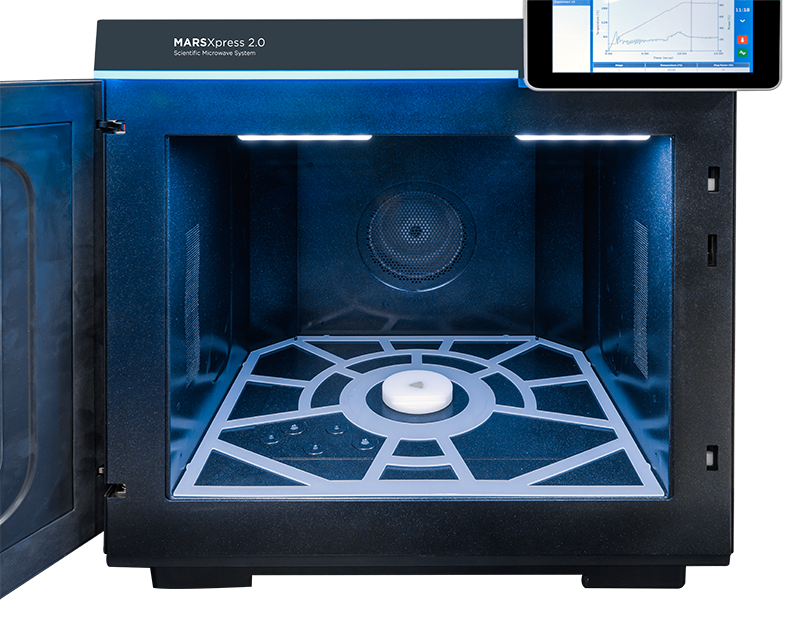
Scientific Microwave System
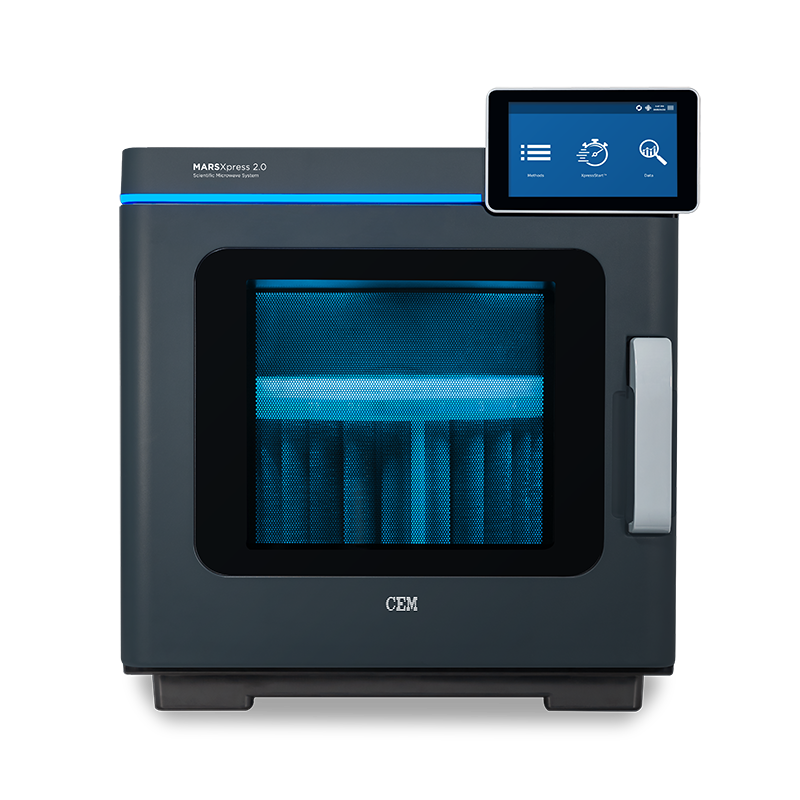
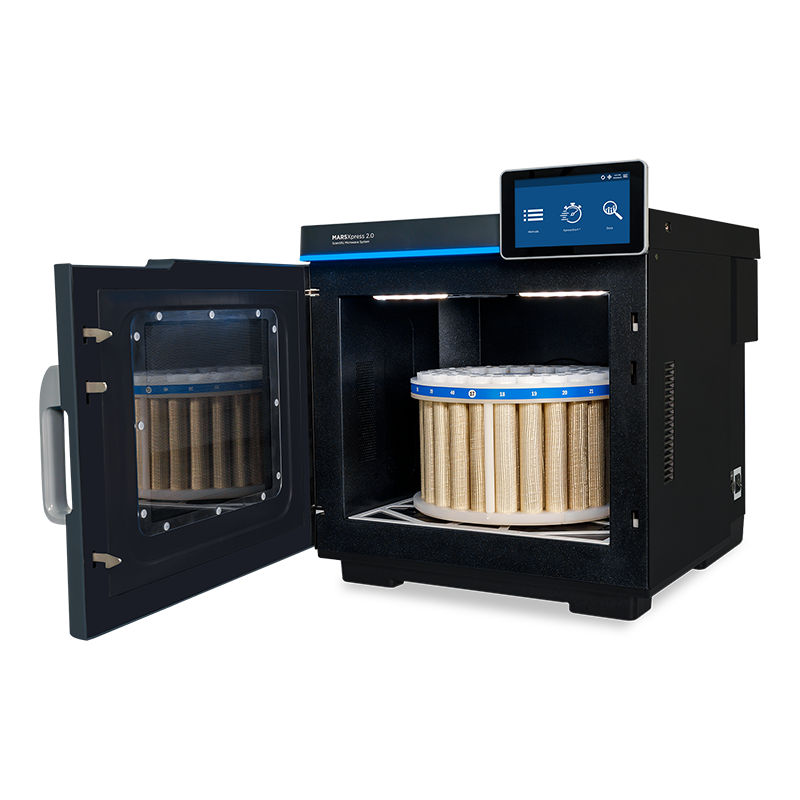
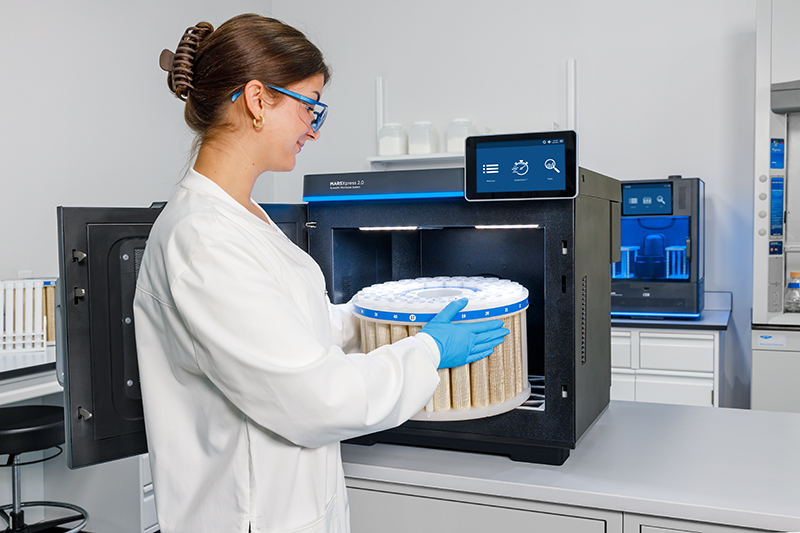
The MARSXpress 2.0 is a scientific microwave digestion system that simplifies routine sample preparation. Built around CEM’s MARSXpress vessel technology and XpressIntelligence features, the system combines straightforward vessel assembly, simplified digestion programming, flexible batch sizes, and monitoring functions.
The MARSXpress 2.0 can process between 1 and 40 samples in a single batch, making it suitable for both individual samples and higher-throughput digestion workflows.
XpressIntelligence
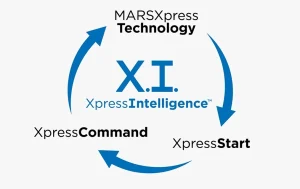 XpressIntelligence combines three technologies: MARSXpress vessel technology, XpressStart, and XpressCommand.
XpressStart simplifies microwave digestion programming. The user selects the desired run temperature and starts the system. The system then determines the vessel type, number and location of vessels in the batch, as well as the required microwave power, ramp time, and hold time.
This makes the MARSXpress 2.0 suitable for everything from a single-sample screening run to a batch of up to 40 samples without requiring the user to determine the complete digestion parameters manually.
XpressCommand provides voice-command functionality as part of the XpressIntelligence system.
MARSXpress vessels and batch flexibility
The MARSXpress 2.0 uses the MARSXpress vessel family. The vessels feature a three-piece design for simple assembly and operation.
The system can process 1, 2, 3, or up to 40 samples in a batch. This allows laboratories to process an individual sample for a rush analysis, perform a small screening batch, or run a full 40-sample batch.
MARSXpress vessels are available in different sizes, ranging from 20 mL to 130 mL, allowing the system to accommodate different sample sizes. The vessels are ideal for routine sample preparation and can be used for food, environmental, and other samples.
The MARSXpress vessel family is used for digestion in preparation for ICP-MS or ICP-OES analysis. The vessels are also suitable for environmental digestion methods, including US EPA Methods 3015a, 3051a, and 3052, as well as European Norms, AOAC methods, ISO standards, ASTM methods, and CPSC testing.
Which MARSXpress vessel set is right for you?
| MARSXpress | MARSXpress Plus | MARSXpress Max | |
|---|---|---|---|
| Vessel capacity | 40 vessels | 24 vessels | 24 vessels |
| Vessel volume | 20, 55, or 75 mL | 110 mL | 130 mL |
| Maximum temperature | 210 °C | 210 °C | 220 °C |
| Compatible instruments | • MARS 6 • MARSXpress 2.0 |
• MARS 6 • MARSXpress 2.0 |
• MARSXpress 2.0 |
Monitoring digestion and run data
The MARSXpress 2.0 provides several ways to monitor digestion. The Visual Light Indicator (VLI) allows to check the system status from across the laboratory, while the system’s viewing window allows users to observe the digestion process.
After a run, users can review the recorded data and view temperature information throughout the digestion. A graphical interface allows the temperature achieved by each sample to be checked against its setpoint.
Run reports can also be exported and customized with method information, temperature and power graphs, and sample data. Reports can additionally include the laboratory’s company logo.
Temperature control and safety
The MARSXpress 2.0 uses the iWave contactless, in-situ temperature sensor to measure sample temperature. The sensor provides temperature readings regardless of the position of the sample in the microwave cavity or the number of samples in the batch. After digestion, the system automatically cools the samples to a set temperature before removal.
A differential pressure sensor monitors the conditions required for vapor evacuation. The system checks the required airflow before, during, and after the digestion run and provides an alert if the required conditions are not met.
Routine high-throughput sample preparation
The MARSXpress 2.0 combines simple vessel assembly, flexible batch processing, automated digestion parameters, and temperature and pressure monitoring for routine microwave sample preparation. Its MARSXpress™ vessels can process up to 40 samples in a batch and are suitable for applications including environmental and food sample digestion prior to ICP-MS or ICP-OES analysis.