English
 Dutch
 French


Fast and Portable COD (Chemical Oxygen Demand) Analyzer
The PeCOD® COD Analyzer is a fast, portable system for measuring Chemical Oxygen Demand (COD). It provides accurate COD results in approximately 10 minutes without using hazardous chemicals such as dichromate or mercury.
The technology is based on a patented nanotechnology approach and is suitable for both wastewater and drinking water applications. It improves analysis speed while reducing environmental impact and health risks in laboratory and operational settings.
Safe, green chemistry
The core of the system is the PeCOD sensor, which uses a UV-activated titanium dioxide (TiO₂) nanoparticle photocatalyst connected to an external circuit.
When a sample enters the microcell:
- The TiO₂ sensor is irradiated with UV light
- It applies a potential bias
- It generates photoholes with high oxidizing power
- It oxidizes organic compounds in the sample
This process enables near-complete oxidation of organics, providing a measure of COD across a broad range of compounds. The system ensures consistent oxidation performance through the strong oxidizing potential of UV-illuminated TiO₂.
Why is PeCOD considered a safer COD method?
PeCOD uses a “green chemistry” approach in comparison to traditional COD methods. It does not require hazardous reagents such as dichromate or mercury.
Key benefits include:
- No use of toxic oxidizing chemicals
- Reduced risk for laboratory and operational staff
- Safer handling across all stages of analysis
- Environmentally safer analytical workflow
The system ensures safe use by both laboratory personnel and operational staff.
How fast and accurate is the PeCOD COD measurement?
PeCOD exists for rapid COD determination, providing results in around 10 minutes. It is a fast method for COD quantification and supports real-time decision-making in process and environmental monitoring.
The technology is highly accurate across a broad range of organic compounds.
How does PeCOD relate to BOD and traditional COD methods?
Studies prove that PeCOD COD results correlate strongly with:
- Standard dichromate COD (CODCR) methods
- Five-day BOD (BOD₅) methods
In many applications, you can use PeCOD as a BOD screening tool, enabling BOD estimation in minutes instead of several days.
Applications
The PeCOD COD Analyzer is used across a range of environmental, industrial, and laboratory settings, including:
- Industrial wastewater
- Municipal wastewater
- Pulp and paper industry
- Food and beverage industry
- Drinking water analysis
- Research and laboratory applications
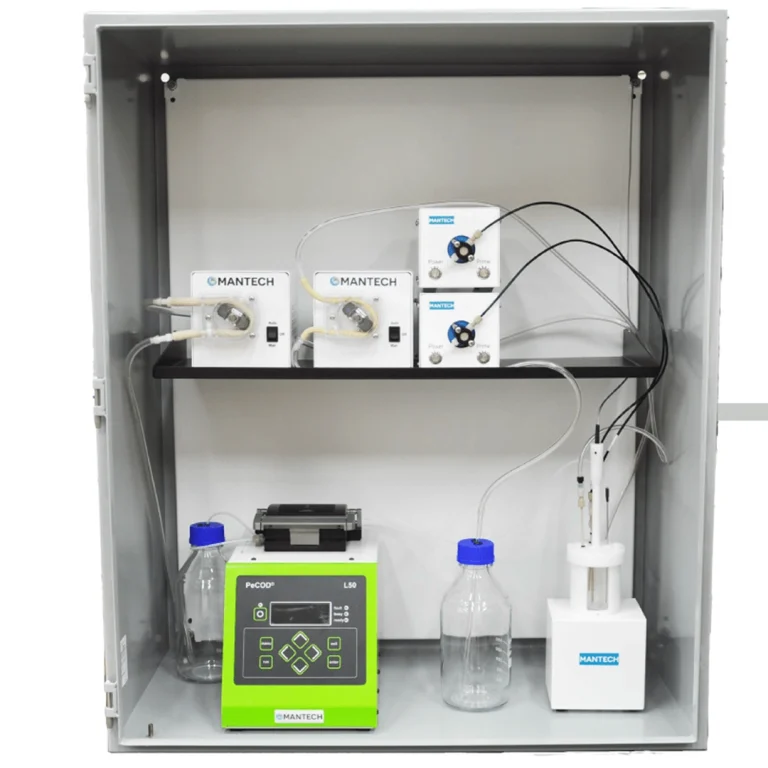
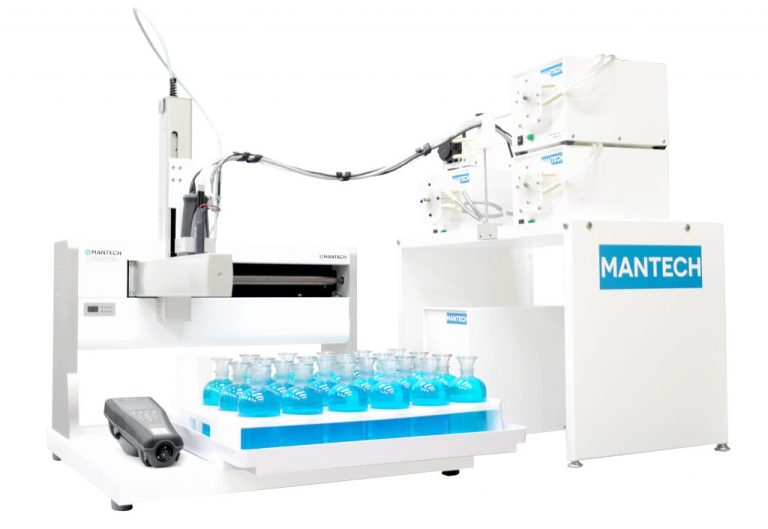
Configurations of the COD analyzer:
| Feature / Benefit | Benchtop L50 | Portable L50 | Automated L50 | Online L50 |
|---|---|---|---|---|
| Primary use | Base laboratory model for routine COD analysis | Field‑portable COD analysis | High‑throughput, unattended laboratory analysis | Continuous online COD monitoring |
| Typical environments | Industrial, municipal, government, academic laboratories | Field locations, remote or on‑site testing | Laboratories processing large sample volumes | Wastewater treatment plants, process monitoring |
| Footprint / dimensions | 280 × 210 mm (11.00 × 8.25 in) | 508 × 355.6 × 609.6 mm (20 × 14 × 24 in) | / | / |
| Weight | 7 kg (15.5 lb) | ~16 kg (35 lb) with analyzer & supplies | / | / |
| Portability | Benchtop, non‑portable | Fully portable with wheeled case | Fixed installation | Fixed installation |
| Sample handling | Manual laboratory sampling | Field sampling, no digestion required | Automated handling of hundreds of samples | Automatic sampling from low‑flow lines or tanks |
| Automation level | Manual operation | Manual operation | Fully automated unattended analysis | Fully automated, real‑time analysis |
| Software | MANTECH Pro™ software | MANTECH Pro™ software | / | / |
| Calibration | / | / | Pre‑calibrated daily | / |
| Additional parameters (optional) | / | / | pH, EC, alkalinity, BOD, turbidity | pH, conductivity, alkalinity, ammonia |
| Process optimization support | No | No | No | Yes, real‑time COD results |
| Advanced control interface | Standard interface via software | Standard interface via software | / | HMI touchscreen for operator control |
| Upgrade options | Can be upgraded to Automated or Online systems | / | / | Optional automated pH adjustment and dilutions |
Did you know?
 World Wildlife Fund (WWF) along with RBC Tech for Nature and Microsoft have named MANTECH’s PeCOD® as a finalist for the Nature x Carbon Challenge! This challenge is to support community accessible carbon analysis technology for nature-based climate solutions(NbCS) to combat biodiversity loss and climate change.