 English
 Dutch
 French

Discrete analyzers
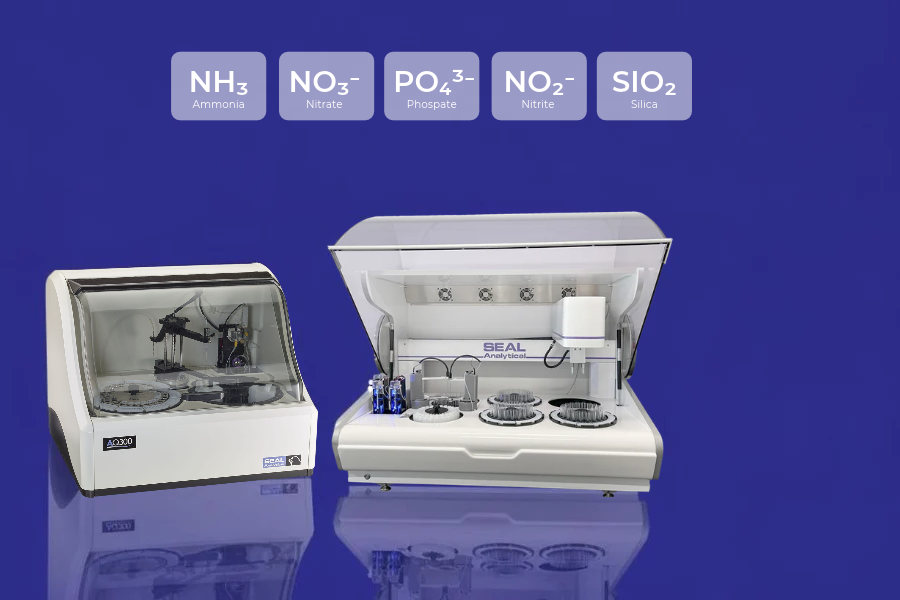
Discrete analyzers automate colorimetric wet-chemistry methods for the determination of nutrients and other chemical parameters. They prepare individual reactions using small quantities of sample and reagent before measuring the resulting colour change.
What is discrete analysis?
Discrete analysis is an automated form of wet-chemical analysis in which each test reaction takes place in a separate reaction vessel. The analyzer dispenses defined quantities of sample and reagent, mixes the solution and allows the reaction to develop under controlled conditions.
The resulting colour intensity is measured photometrically and converted into an analyte concentration using a calibration curve. Multiple parameters can be assigned to the same sample or to different samples during one analytical run.
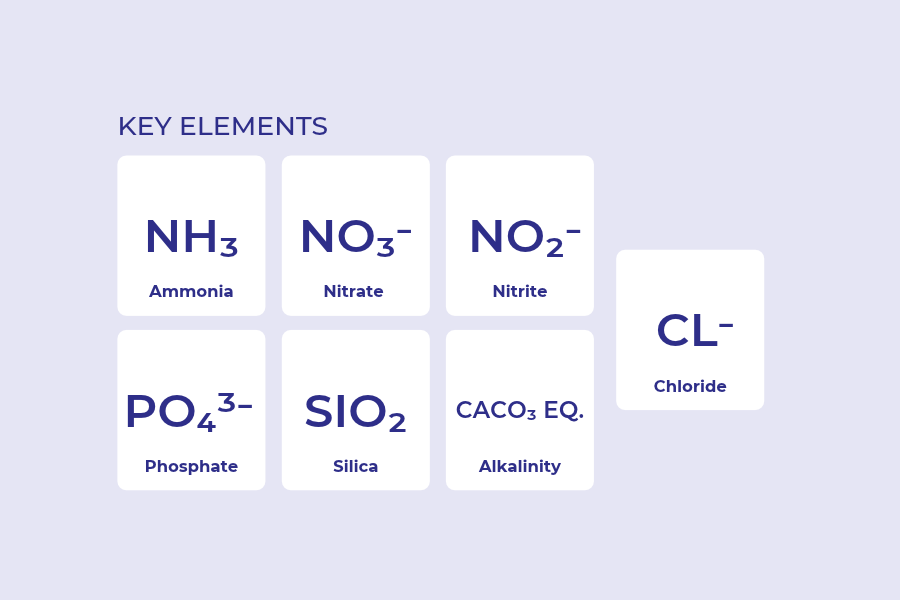
Discrete analyzers are commonly used for parameters such as:
- Ammonia
- Nitrate and nitrite
- Phosphate
- Silica
- Alkalinity
- Chloride
- Other colorimetric water and nutrient parameters
The available methods and measurement ranges depend on the sample matrix and analytical requirements.
How does a discrete analyzer work?
Samples, reagents and calibration standards are loaded onto the analyzer. The software determines which tests must be performed on each sample.
A sampling probe transfers small volumes of sample and reagent into an individual reaction well. The solution is mixed, heated when required and incubated for a defined period to allow the colour reaction to develop.
After incubation, the reaction solution is transferred to a quartz flow-through cuvette. Its absorbance is measured at the selected wavelength, and the software calculates the concentration from the calibration data.
The cuvette and probes are cleaned between measurements to limit carryover. Depending on the method and system configuration, the analyzer can also automate standard preparation, sample blanking, spiking and dilution of over-range samples.
Applications of discrete analysis
Discrete analyzers are used in environmental, agricultural, industrial and research laboratories.
Common applications include:
- Drinking-water analysis
- Municipal and industrial wastewater
- Surface water and groundwater
- Seawater and brackish water
- Soil and plant extracts
- Fertilizer analysis
- Agricultural runoff
- Food and beverage testing
- Industrial process samples
- Environmental research
A single analyzer can perform different colorimetric methods during the same run, making discrete analysis particularly useful for laboratories that measure several parameters across varied sample batches.

Advantages of automated discrete analysis
Discrete analyzers automate many of the steps traditionally performed manually during colorimetric analysis.
Multiple parameters
Different tests can be performed on the same sample during one run. Laboratories can also assign different parameter combinations to individual samples.
Low sample and reagent consumption
Only small volumes of sample and reagent are required for each reaction. This can reduce reagent costs, waste production and the volume of sample needed.
Automated quality-control procedures
Depending on the selected method and workflow, the system can automate calibration-standard preparation, sample blanking, spiking and dilutions.
Unattended operation
Samples and methods can be programmed in advance, allowing the analyzer to process sequences with limited operator intervention.
Flexible sample scheduling
Additional or priority samples can be introduced into the workflow without preparing an entirely separate analytical batch.
Choosing a discrete analyzer
The appropriate system depends mainly on the number of samples, number of tests per sample and required level of unattended operation.
Sample workload
Laboratories processing smaller sample batches may benefit from a compact system. Medium- and high-throughput laboratories require more sample positions and greater reaction capacity.
Number of parameters
The total workload depends on both the number of samples and the number of tests assigned to each sample. A laboratory measuring several parameters per sample may require more capacity than the sample count alone suggests.
Walk-away time
A larger sample capacity provides longer periods of unattended operation. This can be important for laboratories running extended sequences or overnight analyses.
Available bench space
Instrument dimensions should be considered when laboratory space is limited. A compact analyzer may provide sufficient automation without occupying unnecessary bench space.
Methods and detection requirements
The analyzer must support the required colorimetric methods, concentration ranges and applicable analytical standards. Method selection should also account for the sample matrix and potential interferences.
Data management
Laboratories handling large quantities of results may require barcode identification and integration with a laboratory information management system.
Frequently asked questions
What is a discrete analyzer?
A discrete analyzer is an automated wet-chemistry system that prepares and measures individual colorimetric reactions. Each sample and reagent combination is processed in a separate reaction vessel before photometric detection.
What can a discrete analyzer measure?
Discrete analyzers can determine nutrients and other parameters for which a suitable colorimetric method is available. Common examples include ammonia, nitrate, nitrite, phosphate, silica, alkalinity and chloride.
Can multiple parameters be measured during one run?
Yes. Different tests can be assigned to the same sample, and different samples can receive different combinations of tests within one run.
What is the difference between discrete and continuous flow analysis?
A discrete analyzer prepares each reaction separately in an individual vessel. In continuous flow analysis, samples and reagents travel through a continuous flowing stream. Both techniques automate wet-chemical methods, but their workflows, capacities and method configurations differ.
How is the concentration measured?
After the chemical reaction has developed, the analyzer measures the absorbance of the solution at a selected wavelength. The software compares this response with a calibration curve to calculate the analyte concentration.
Can a discrete analyzer dilute over-range samples?
Yes. SEAL discrete analyzers can perform programmed sample dilutions. Over-range samples can also be identified and diluted automatically according to the configured method and workflow.
Which discrete analyzer should I choose?
The choice mainly depends on sample volume, number of parameters per sample, available bench space and required walk-away time. The AQ300 is intended for smaller workloads, the AQ400 for medium-throughput analysis and the AQ700 for laboratories requiring maximum capacity.
Compare our discrete analyzers
SciSPX supplies discrete analyzers to laboratories in Belgium, the Netherlands and Luxembourg. The available systems range from a compact analyzer for smaller workloads to a high-capacity platform for laboratories with demanding testing requirements.
The principal differences concern sample capacity, throughput, footprint and walk-away time. Use the comparison below to identify which discrete analyzer best matches your laboratory workflow.
Analyzer | Sample capacity | Reagent positions | Reaction positions | Best suited for |
|---|---|---|---|---|
AQ700 | Up to 424 positions | 24 | 848 | High-volume laboratories requiring maximum capacity and extended unattended operation |
AQ400 | Up to 120 positions | 26 | 216 | Medium-throughput laboratories performing varied tests across multiple samples |
AQ300 | Up to 97 positions | 18 | 180 | High-throughput batch extraction |
The appropriate capacity should be evaluated against the complete testing workload. A laboratory measuring several parameters on every sample may require a higher-capacity system even when the daily sample count is relatively moderate.
Find the right discrete analyzer
Selecting a discrete analyzer starts with defining the sample types, parameters, daily workload and number of tests required per sample. Available bench space, walk-away time and data-management requirements should also be considered.
We can help you compare the available systems and select a configuration suited to your analytical workflow.

High-throughput
AQ700
The highest-capacity system in the range. Four robotic arms and four sample trays support high-throughput analysis and extended unattended operation.

Medium-throughput
AQ400
Combines automated colorimetric analysis with a compact benchtop design. It is intended for medium-throughput laboratories performing multiple tests on varied samples.

Compact system
AQ300
Provides automated colorimetric analysis in a compact format. It is suited to laboratories with smaller workloads or limited bench space.
Not sure which analyzer fits your application?
Our Xperts are happy to discuss your application and help you find the right solution.
