 English
 Dutch
 French

ISO 20236:2024 for wastewater analysis
What laboratories need to know

ISO 20236: what you need to know
Starting January 1, 2026, laboratories in the Benelux region will face a major shift in wastewater analysis with the introduction of ISO 20236. This new regulation, ISO 20236, mandates that all wastewater be analyzed using a TOC/TNb analyzer. It replaces the current method of measuring wastewater through Chemical Oxygen Demand (COD). While COD has been widely used for many years, this shift marks a significant change in laboratory testing methods, bringing with it many benefits, but also requiring some adjustments.
Understanding TOC, DOC, TNb and DNb determination using high-temperature catalytic combustion
ISO 20236:2024 provides a standardized method for determining organic carbon and bound nitrogen in water samples. The method uses high-temperature catalytic oxidative combustion and automated analysis.
For laboratories performing wastewater analysis, the standard provides an important framework for measuring total organic carbon (TOC) and total bound nitrogen (TNb). It also covers dissolved organic carbon (DOC) and dissolved bound nitrogen (DNb).
But what exactly does ISO 20236 specify? How does the method differ from traditional chemical oxygen demand (COD) testing? And what should laboratories consider when selecting analytical equipment?
What is ISO 20236?
ISO 20236:2024 is an international water quality standard published in November 2024. It specifies the determination of TOC, DOC, TNb and DNb through high-temperature catalytic oxidative combustion.
The standard applies to various water matrices, including:
Wastewater and industrial effluents
Drinking water and raw water
Surface water and groundwater
Seawater
Leachates
The current edition replaces ISO 20236:2018 and introduces technical revisions to the analytical method. In Europe, the standard is also published as EN ISO 20236:2024. National implementations include NBN EN ISO 20236:2024 in Belgium.
ISO 20236 defines an analytical method. Whether laboratories must apply it depends on relevant regulations, accreditation requirements, contractual specifications and testing objectives.
Which parameters does ISO 20236 measure?
The standard covers four important water quality parameters.
Total organic carbon (TOC)
TOC measures the carbon associated with organic compounds in a water sample.
It provides an aggregate indication of organic carbon content. Laboratories use TOC measurements to monitor water quality, evaluate treatment processes and investigate organic contamination.
Dissolved organic carbon (DOC)
DOC represents the organic carbon present in the dissolved fraction of a water sample.
Laboratories determine DOC after appropriate sample filtration. The result excludes organic carbon associated with particles retained by the filter.
Total bound nitrogen (TNb)
TNb measures nitrogen in compounds that can be converted into nitrogen oxides during the analytical procedure.
These include:
Ammonia and ammonium
Nitrite and nitrate
Organic nitrogen compounds
The method does not determine dissolved molecular nitrogen (N₂).
Dissolved bound nitrogen (DNb)
DNb measures bound nitrogen in the dissolved fraction of a water sample. Laboratories determine this parameter after filtration according to the applicable method requirements. The distinction between TNb and DNb helps laboratories investigate nitrogen associated with dissolved substances and suspended material.
Why the change?
The traditional COD method is the standard for measuring wastewater quality. It measures the amount of oxygen required to chemically oxidize the organic material in wastewater. However, the COD method comes with a number of drawbacks. It is a more intensive process that requires the use of harmful chemicals and takes a significant amount of time to complete.
Laboratories have long been looking for a more efficient, reliable, and sustainable method for testing wastewater. ISO 20236 aims to address these concerns by introducing the Total Organic Carbon (TOC) and Total Nitrogen Bound (TNb) measurement approach.
How does ISO 20236 analysis work?
ISO 20236 uses high-temperature catalytic oxidative combustion to determine organic carbon and bound nitrogen.
The analytical procedure involves several stages.
Sample preparation: the laboratory prepares the water sample according to the required parameter and analytical procedure.
Sample introduction: an automated system introduces a defined sample volume into the combustion system.
High-temperature oxidation: organic carbon compounds are oxidized to carbon dioxide (CO₂). Nitrogen-containing compounds are converted into measurable nitrogen oxides.
Gas detection: the instrument measures the resulting gases using suitable detection systems.
Quantification: the system calculates carbon and nitrogen concentrations using appropriate calibration.
The exact sample preparation, detection configuration and measurement procedure depend on the parameter and analytical system.
ISO 20236:2024 generally applies to TOC, DOC, TNb and DNb concentrations of at least 1 mg/L. Measurements below this concentration depend on instrument capabilities and appropriate calibration.
Samples with higher concentrations may require dilution. For certain samples containing volatile organic compounds, such as industrial wastewater, laboratories should also consider the appropriate carbon determination approach.
Why use TOC and TNb analysis in wastewater laboratories?
Wastewater laboratories routinely monitor organic pollution and nitrogen concentrations.
Traditional methods, including chemical oxygen demand (COD), remain important for assessing wastewater quality. However, laboratories may also benefit from automated TOC and TNb measurements.
Reduced chemical consumption
Conventional dichromate COD methods use hazardous chemical reagents. High-temperature combustion-based TOC analysis can reduce the need for these reagents during routine measurements. This may help laboratories reduce hazardous chemical handling and associated waste.
Automated analysis
Automated TOC/TNb systems can simplify repetitive measurements and reduce manual sample handling. Automation can improve laboratory throughput, particularly when laboratories process large sample batches.
Multiple analytical parameters
Suitable analyzer configurations can support carbon and nitrogen determination within an integrated analytical workflow. This can help laboratories consolidate selected water quality measurements.
Consistent analytical procedures
A standardized method supports comparable analytical practices when laboratories follow the specified procedures and apply appropriate quality control. Measurement performance still depends on calibration, sample characteristics, instrument maintenance and method validation.
TOC vs COD: what is the difference?
Chemical oxygen demand (COD) and total organic carbon (TOC) both provide information about water quality. However, they measure different analytical properties.
COD measures the oxygen equivalent of substances oxidized under defined chemical conditions. TOC measures the amount of organically bound carbon in a sample.
| Parameter | TOC | COD |
|---|---|---|
| What it measures | Organic carbon concentration | Chemical oxygen demand |
| Typical analytical approach | Combustion and CO₂ detection | Chemical oxidation |
| Common reporting unit | mg C/L | mg O₂/L |
| Chemical consumption | Depends on the method; combustion-based analysis avoids dichromate COD reagents | Conventional dichromate methods require chemical reagents |
| Main application | Organic carbon monitoring | Oxidizable pollution load assessment |
What does ISO 20236 mean for laboratories?
Laboratories implementing ISO 20236 should evaluate their existing analytical procedures and equipment.
Important considerations include:
1. Analytical requirements
Determine which parameters are required for the laboratory’s applications. These may include TOC, DOC, TNb or DNb.
2. Instrument suitability
Select an analyzer that supports the required parameters and analytical ranges.
3. Sample characteristics
Consider suspended solids, organic carbon concentrations, nitrogen concentrations and potential matrix interferences.
4. Method validation
Evaluate calibration, precision, recovery, measurement uncertainty and other relevant performance characteristics.
5. Laboratory workflows
Assess sample throughput, automation requirements, maintenance procedures and staff training. Laboratories operating under ISO/IEC 17025 should also evaluate the applicable method verification or validation and accreditation requirements.
Implementing ISO 20236 does not necessarily mean replacing every existing wastewater testing method. The decision depends on the laboratory’s analytical and regulatory needs.
Benefits of ISO 20236-based TOC/TNb analysis
For laboratories seeking efficient water quality measurements, combustion-based TOC/TNb analysis offers several potential advantages.
Sustainability: reduced dependence on hazardous reagents used in conventional dichromate COD analysis.
Efficiency: automated measurements can reduce manual handling and support higher sample throughput.
Analytical consistency: standardized procedures support reliable measurements when combined with appropriate quality control.
Versatility: suitable systems can analyze multiple water matrices and carbon or nitrogen parameters.
Method standardization: ISO 20236 provides a recognized analytical framework for laboratories performing water quality analysis.
The actual benefits depend on sample characteristics, analytical requirements and instrument configuration.
What we recommend
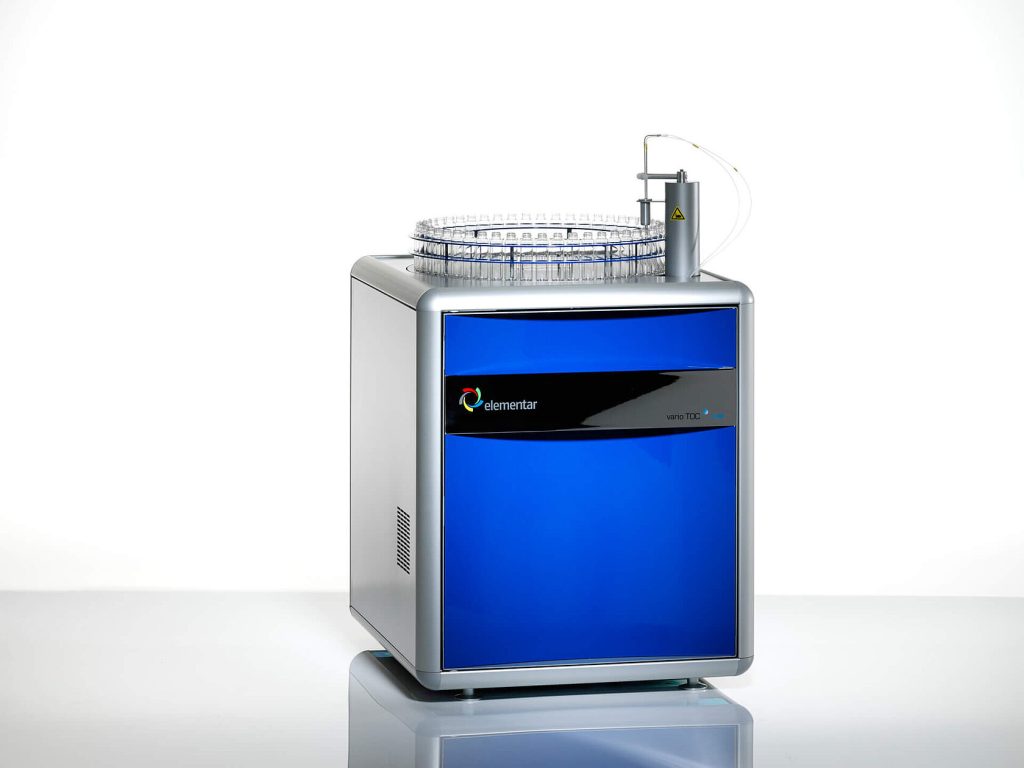
The Vario TOC from Elementar is an ideal solution for laboratories transitioning to the new ISO standard. The Vario TOC analyzer provides high precision in measuring both TOC and TNb, ensuring that laboratories can meet the new requirements with ease.
Discuss your application with our Xperts
Our Xperts are happy to discuss your application and help you find the right solution.
FAQ
Does ISO 20236 replace COD analysis?
No, the standard does not itself universally replace COD testing. TOC and COD measure different parameters, and laboratories must follow their applicable testing requirements.
What is the difference between TOC and TNb?
TOC measures organically bound carbon, while TNb measures nitrogen in compounds converted to nitrogen oxides during analysis. Both provide complementary information about water quality.
Can ISO 20236 be used for industrial wastewater?
Yes. The standard includes wastewater within its scope. Laboratories should evaluate the sample matrix, concentration range and potential interferences before applying the method.
What is the difference between TNb and DNb?
TNb covers bound nitrogen in the analyzed water sample. DNb covers bound nitrogen in the dissolved fraction after appropriate filtration.
